

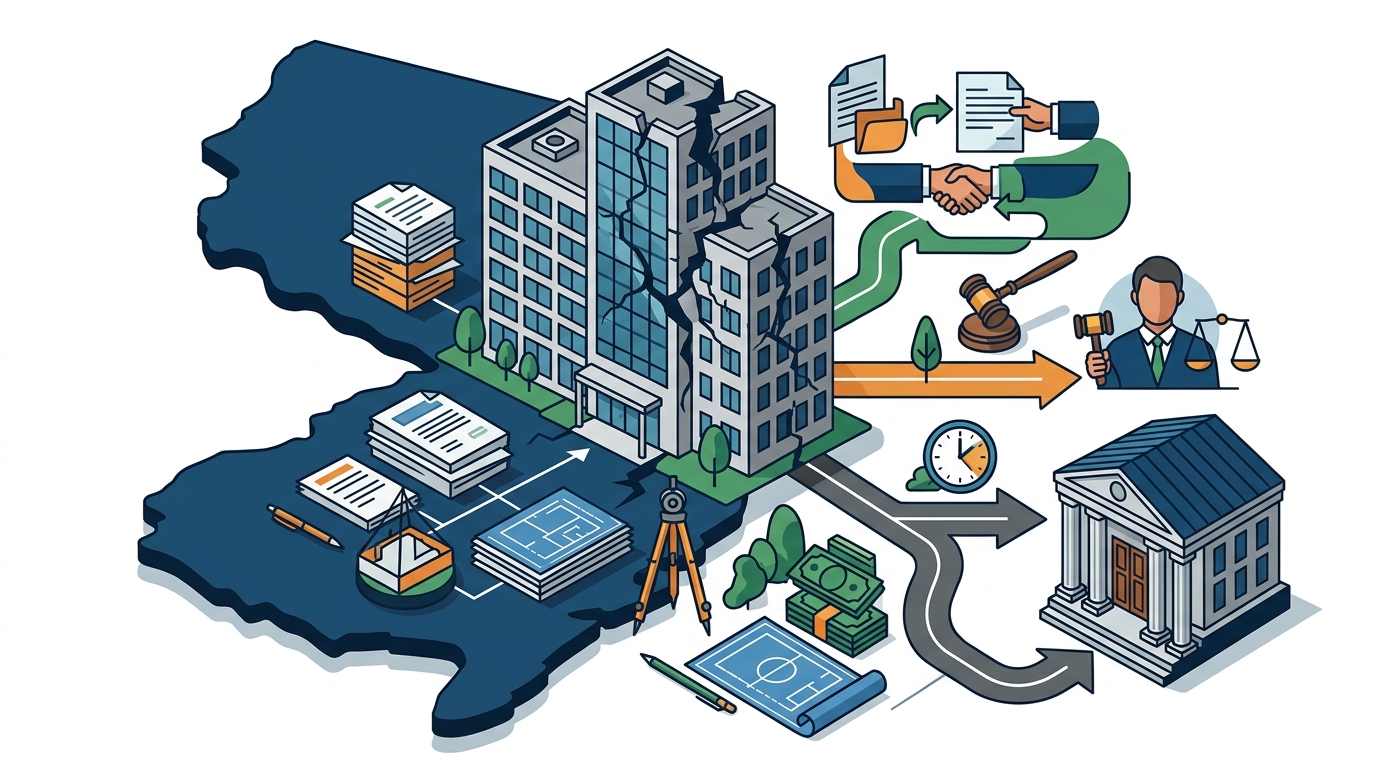
Corporate disputes in New Jersey can arise from shareholder disagreements, breach of contract, partnership conflicts, or fiduciary duty violations. Left unresolved, these conflicts drain resources, damage relationships, and threaten the viability of your business. The good news is that New Jersey offers several proven pathways to resolve corporate disputes, from informal negotiation to formal litigation in state and federal courts. This guide breaks down each option so you can make an informed decision about the best strategy for your situation, whether you run a closely held company or a multi-member LLC.
Direct Negotiation: The First Step
Negotiation is the process of resolving a dispute through direct communication between the parties, often with the guidance of their attorneys. It is typically the fastest and least expensive path to a resolution. Before escalating a corporate dispute, business owners should attempt to resolve differences at the table.
A well-drafted shareholder agreement or operating agreement often spells out the rights, responsibilities, and remedies available to each party. When such an agreement exists, negotiation can focus on specific contractual provisions rather than broad legal principles. In many cases, an experienced attorney can help the parties reach a settlement that preserves the business relationship and avoids public exposure.
Mediation: Guided Settlement
Mediation is a voluntary, non-binding process in which a neutral third party helps disputing parties reach a mutually agreeable settlement. Unlike a judge or arbitrator, the mediator does not decide who wins. Instead, the mediator facilitates dialogue, identifies common ground, and helps the parties craft their own resolution.
Why Mediation Works for Corporate Disputes
New Jersey courts actively encourage mediation. Under Court Rule 1:40, certain civil case types are automatically referred to mediation after an answer is filed. Roster mediators approved by the court system provide the first two hours of mediation at no charge, lowering the barrier to entry.
Mediation also offers confidentiality that courtroom proceedings do not. For businesses concerned about public exposure of sensitive financial or operational details, this is a significant advantage. LoFaro Carver LLC's Alternative Dispute Resolution practice provides efficient, cost-effective, and impartial mediation services at any stage of conflict.
Arbitration: A Binding Private Decision
Arbitration is a private adjudicative process in which a neutral arbitrator hears evidence from both sides and issues a binding decision. It is often faster and less expensive than traditional litigation, though it is not without cost. Parties to arbitration give up the right to a jury trial and, in most cases, the ability to appeal.
When Arbitration Makes Sense
Arbitration is especially useful when the shareholder agreement, operating agreement, or commercial contract includes a mandatory arbitration clause. Organizations like the American Arbitration Association (AAA) administer proceedings under established rules, assign qualified arbitrators, and manage the process from start to finish.
Discovery is limited in arbitration, which speeds resolution but may restrict a party's ability to uncover critical evidence. Businesses should weigh these trade-offs carefully with the help of an experienced commercial litigation attorney.
Litigation in New Jersey Courts
When negotiation, mediation, and arbitration fail or are inappropriate, litigation in the New Jersey Superior Court remains the traditional remedy. The Superior Court has two divisions relevant to corporate disputes: the Law Division and the Chancery Division.
Law Division vs. Chancery Division
The Law Division generally handles cases seeking monetary damages. The Chancery Division, however, can award equitable relief such as restraining orders, forced buyouts, corporate dissolutions, and injunctions. Because most corporate disputes involve complex issues beyond simple money judgments, the majority of shareholder and LLC litigation proceeds in the Chancery Division.
What to Expect in Court
Litigation involves formal discovery, depositions, expert witnesses, and potentially a trial. It is the most time-consuming and expensive option, but it provides the broadest range of remedies and the strongest enforcement mechanisms. The attorneys at LoFaro Carver LLC have over 110 years of combined experience navigating the New Jersey court system, including representation in both state and federal courts.
The Complex Business Litigation Program (CBLP)
New Jersey's Complex Business Litigation Program is a specialized court track designed to handle high-stakes business, commercial, and construction disputes more efficiently. A case is automatically assigned to the CBLP when the amount in controversy is at least $200,000 and the parties designate it as complex commercial litigation.
Under the CBLP, at least one designated judge in each vicinage individually manages every case in the program, improving case management and reducing delays. These judges are also required to publish written opinions, which contributes to a growing body of business case law in New Jersey.
Comparing Your Dispute Resolution Options
| Method | Binding? | Typical Timeline | Relative Cost | Privacy | Best For |
|---|---|---|---|---|---|
| Negotiation | Only if settled | Days to weeks | Low | High | Early-stage disputes, ongoing relationships |
| Mediation | No (voluntary) | Weeks to months | Low to moderate | High | Complex disputes where parties want control |
| Arbitration | Yes | Months | Moderate | High | Contractual clauses, faster resolution |
| Litigation (Law Division) | Yes | 1-3 years | High | Low (public) | Monetary damages claims |
| Litigation (Chancery) | Yes | 1-3 years | High | Low (public) | Equitable relief, buyouts, dissolutions |
| CBLP | Yes | Expedited | High | Low (public) | Claims over $200K, complex commercial cases |
Key Takeaways
- New Jersey provides multiple pathways for resolving corporate disputes, including negotiation, mediation, arbitration, and litigation.
- Mediation offers confidentiality and party control, and NJ courts often require it before trial under Court Rule 1:40.
- Arbitration delivers a binding decision faster than litigation but limits discovery and appeal rights.
- Most shareholder and LLC disputes proceed in the Chancery Division, which can order equitable remedies like forced buyouts and dissolutions.
- The Complex Business Litigation Program expedites cases with at least $200,000 in controversy through dedicated judicial management.
- A well-drafted shareholder or operating agreement can dictate the dispute resolution method, saving time and money later.
- Engaging experienced counsel early increases the likelihood of a favorable and cost-effective resolution.
Frequently Asked Questions
What is alternative dispute resolution (ADR)?
Alternative dispute resolution is an umbrella term for methods of resolving disputes outside of traditional courtroom litigation. The two most common forms are mediation and arbitration. ADR is generally faster, less expensive, and more private than going to trial.
Can a court force me to mediate a corporate dispute in New Jersey?
Yes. Under New Jersey Court Rule 1:40, judges can refer civil cases to mediation at any point. Certain case types are automatically referred to mediation after the defendant files an answer. However, the outcome of mediation is non-binding unless the parties reach a voluntary agreement.
What is the Chancery Division?
The Chancery Division is a part of the New Jersey Superior Court that handles cases requiring equitable relief rather than just monetary damages. It has the authority to order corporate dissolutions, forced buyouts, restraining orders, and injunctions, making it the primary venue for complex corporate disputes.
How much does arbitration cost in New Jersey?
Costs vary depending on the arbitrator's experience, the administering organization (such as the AAA), and the value of the claims. While arbitration is generally less expensive than full litigation, it is not inexpensive. Parties should budget for arbitrator fees, administrative fees, and attorney costs.
What types of corporate disputes are most common?
Common corporate disputes in New Jersey include shareholder disagreements over profit distribution, breach of fiduciary duty, breach of contract, disputes among LLC members, partnership dissolutions, and conflicts over corporate governance. These issues affect businesses of all sizes.
Should my shareholder agreement include an ADR clause?
Yes. Including a mediation or arbitration clause in your shareholder or operating agreement can save significant time and money if a dispute arises. It establishes the resolution method in advance so the parties do not need to agree on a process during a conflict.
What is the Complex Business Litigation Program?
The CBLP is a specialized track within the New Jersey Superior Court for handling complex business, commercial, and construction disputes. Cases with at least $200,000 in controversy that are designated as complex are assigned to a dedicated judge for individualized case management.
How do I know which dispute resolution method is right for my case?
The right method depends on several factors: the nature of the dispute, the relationship between the parties, the remedies sought, the existence of contractual ADR clauses, and the urgency of the situation. An experienced New Jersey business attorney can help you evaluate these factors and choose the best path forward.
Get Experienced Legal Guidance
Corporate disputes can threaten your business, your finances, and your professional relationships. Whether you need skilled negotiation, strategic mediation, or aggressive courtroom advocacy, LoFaro Carver LLC brings over 110 years of combined legal experience to every matter. Our ADR department is chaired by Hon. Alexander H. Carver, III, J.S.C. (Ret.), a former Superior Court judge with more than 45 years of litigation experience. Contact LoFaro Carver LLC today at (201) 498-0400 to schedule a consultation and protect your business interests.