

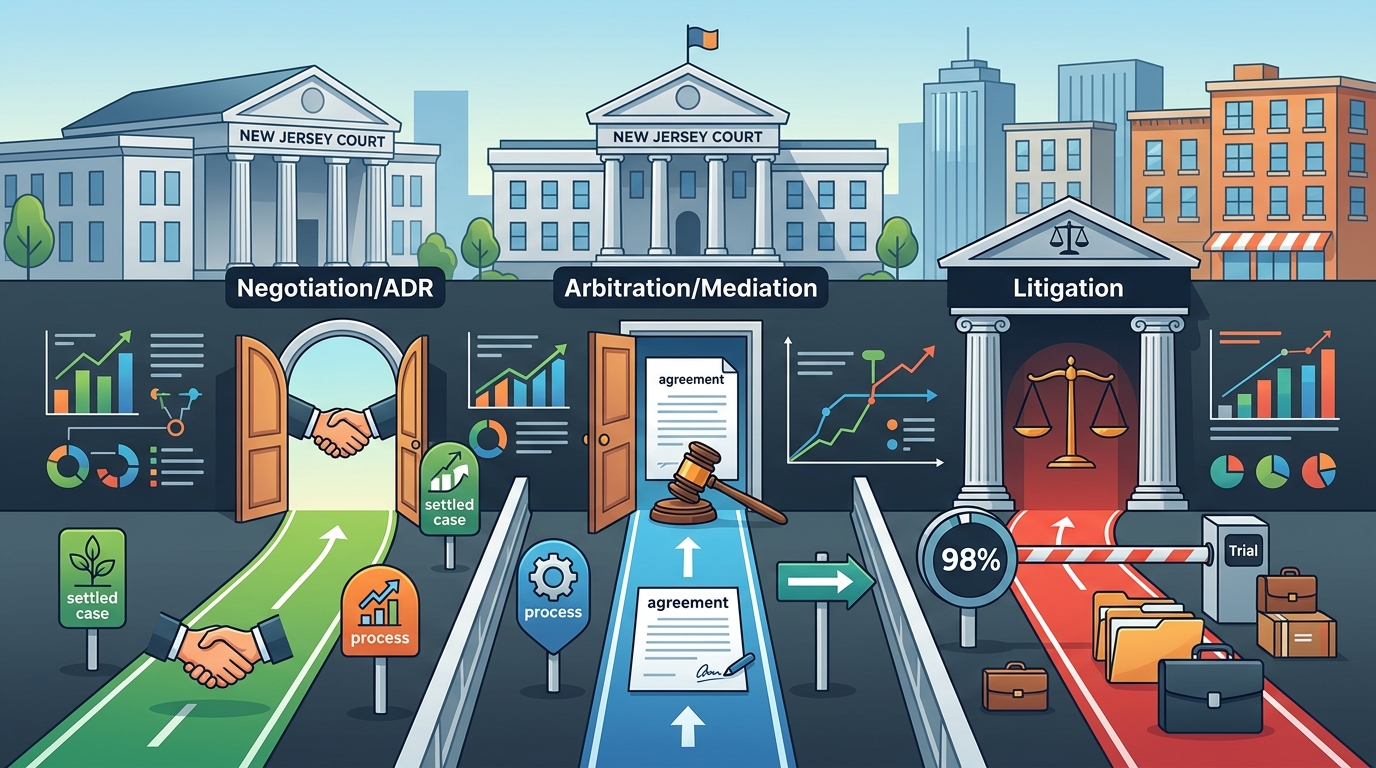
Corporate disputes can drain resources, damage business relationships, and stall growth. Whether you are facing a breach of contract, a shareholder disagreement, or a partnership conflict, New Jersey offers multiple pathways to resolution. From informal negotiation to full-blown litigation, understanding each option helps you choose the approach that best protects your interests. According to the New Jersey Courts, almost 98 percent of all civil cases are resolved without a trial. Below, we break down every major dispute resolution method available to New Jersey businesses.
Direct Negotiation: The First Line of Defense
Negotiation is a voluntary, informal process in which the disputing parties communicate directly, or through counsel, to reach a mutually acceptable agreement. It is typically the fastest and least expensive option because no neutral third party is required.
For many corporate conflicts, such as contract renegotiations or payment disputes, negotiation preserves business relationships and keeps sensitive details private. At LoFaro Carver LLC, our business and corporate law attorneys routinely guide clients through structured negotiations designed to protect their interests while avoiding court.
Mediation: Guided Settlement with a Neutral Third Party
Mediation is a flexible, non-binding, and confidential process in which a neutral mediator facilitates settlement discussions between the parties. The mediator does not decide the case. Instead, the mediator helps each side articulate interests, identify common ground, and explore creative solutions.
When Mediation Works Best
Mediation is particularly effective when the parties have an ongoing business relationship they want to preserve. Commercial disputes, construction disagreements, and partnership conflicts are well suited to this approach. New Jersey courts frequently refer corporate cases to mediation after an answer is filed.
The Role of the Mediator
A qualified mediator uses private caucuses and joint sessions to move parties toward agreement. Because mediation is non-binding, either party can walk away at any time if a fair resolution cannot be reached. Learn more about how our firm handles these matters on our alternative dispute resolution page.
Arbitration: A Private, Binding Decision
Arbitration is an adjudicative process in which a single arbitrator or a panel renders a binding award after an expedited hearing. The parties present evidence and arguments much like a trial, but the proceedings are less formal, faster, and typically less expensive.
Binding vs. Non-Binding Arbitration
Under New Jersey law, parties may stipulate in advance that the arbitration award will be binding. If they do not, the award is non-binding and either side may request a trial de novo. The New Jersey Court Rules (Rule 1:40) govern these procedures.
Mandatory Arbitration in New Jersey
Arbitration is mandatory statewide for certain civil cases, including contracts and commercial matters heard in the Law Division. Arbitrators must be attorneys with at least seven years of relevant New Jersey experience, ensuring that complex corporate issues receive knowledgeable review.
Commercial Litigation: When Court Is Necessary
Sometimes negotiation and ADR cannot resolve a dispute. Commercial litigation is the formal process of resolving a business conflict through the New Jersey Superior Court system. It provides the full range of legal remedies, including monetary damages, injunctive relief, and equitable remedies such as forced buyouts or dissolution of business entities.
Our business and commercial litigation team has decades of experience handling breach of contract, fraud, shareholder oppression, and other complex disputes in both state and federal courts across New Jersey.
New Jersey's Complementary Dispute Resolution Programs
Complementary Dispute Resolution (CDR) is the term New Jersey's judiciary uses for court-supervised programs that help resolve cases without a full trial. CDR programs are available in the Superior Court and Municipal Courts and are considered an integral part of the judicial process.
Types of CDR Programs
Beyond standard mediation and arbitration, New Jersey courts offer bar paneling (where attorney panels provide non-binding settlement recommendations), summary jury trials, early neutral evaluation, and expedited jury trials. These programs give litigants flexibility to find the resolution process that fits their case.
The New Jersey Judiciary's CDR publication provides detailed guidance on each program. Our litigation practice integrates these CDR options into every case strategy.
Comparison Table: Resolution Methods at a Glance
| Method | Binding? | Typical Timeline | Relative Cost | Privacy | Best For |
|---|---|---|---|---|---|
| Negotiation | Only if agreement signed | Days to weeks | Low | High | Simple contract disputes |
| Mediation | Non-binding | Weeks to months | Low to moderate | High | Ongoing business relationships |
| Arbitration | Binding or non-binding | Months | Moderate | High | Complex commercial disputes |
| Litigation | Binding (subject to appeal) | Months to years | High | Low (public record) | High-stakes disputes needing court remedies |
| CDR Programs (Bar Panel, SJT) | Non-binding | Weeks to months | Low to moderate | Moderate | Cases needing a reality check before trial |
Key Takeaways
- Nearly 98% of New Jersey civil cases resolve without trial, making ADR and CDR critical tools for corporate disputes.
- Negotiation is the fastest and cheapest option and should always be explored first.
- Mediation is a non-binding, confidential process ideal for preserving business relationships.
- Arbitration provides a binding decision faster and at lower cost than traditional litigation.
- New Jersey courts mandate arbitration for many contract and commercial matters.
- CDR programs such as bar paneling and summary jury trials offer unique, court-supervised alternatives.
- An experienced New Jersey business attorney can help you select the right resolution strategy for your specific dispute.
Frequently Asked Questions
What is alternative dispute resolution (ADR)?
Alternative dispute resolution is a collective term for methods of resolving legal conflicts outside of a traditional courtroom trial. In New Jersey, common ADR methods include negotiation, mediation, and arbitration. The state's judiciary formally uses the term "complementary dispute resolution" (CDR) because these programs work alongside, not as replacements for, the court system.
Is mediation legally binding in New Jersey?
No. Mediation is a non-binding process. The mediator facilitates discussion but does not impose a decision. However, if the parties reach a written settlement agreement during mediation, that agreement becomes a binding contract enforceable in court.
When is arbitration mandatory for corporate disputes in NJ?
Arbitration is mandatory statewide for certain civil cases filed in the Law Division, including contracts and commercial matters. The specific rules are found in New Jersey Court Rule 4:21A.
How long does commercial litigation take in New Jersey?
Timelines vary widely. Simple breach of contract cases may resolve within several months, while complex shareholder or multi-party disputes can take one to three years or longer, especially if appeals are involved.
Can I switch from litigation to mediation mid-case?
Yes. New Jersey courts encourage parties to pursue CDR at any stage of litigation. A judge, court staff, or the parties themselves can initiate a referral to mediation even after a lawsuit has been filed.
What types of corporate disputes can be mediated?
Virtually any business dispute can benefit from mediation. Common examples include breach of contract, partnership and LLC disagreements, shareholder oppression claims, commercial lease disputes, and construction conflicts.
Do I need a lawyer for arbitration or mediation?
While not legally required, having an experienced attorney is strongly recommended. A business attorney understands arbitration rules, can advocate effectively during mediation, and ensures your rights are protected throughout the process. Our team of attorneys at LoFaro Carver LLC brings over 110 years of combined experience in these matters.
What is bar paneling in New Jersey courts?
Bar paneling is a CDR process in which two or more attorneys hear a condensed presentation of the case and provide a non-binding settlement recommendation, including a suggested settlement range. These proceedings are confidential and typically take place at court facilities on the scheduled trial date.
Discuss Your Corporate Dispute with LoFaro Carver LLC
Choosing the right dispute resolution strategy can save your business significant time and money. Whether you need skilled negotiation, experienced mediation counsel, or aggressive courtroom representation, our attorneys are ready to help. Contact LoFaro Carver LLC today to schedule a consultation and take the first step toward resolving your corporate dispute.