

Key Legal Protections for New Jersey Business Deals in 2026
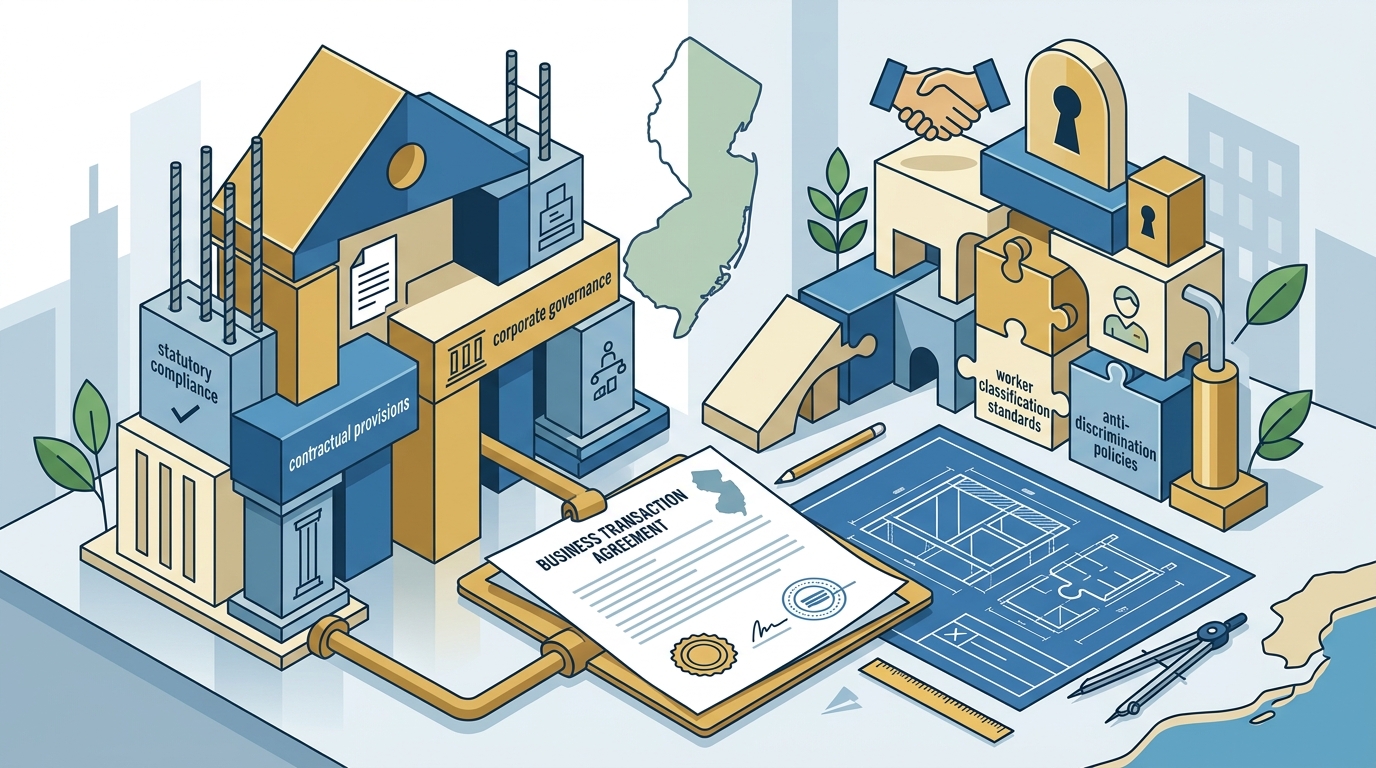
Business owners in New Jersey must understand specific statutory and contractual safeguards before closing transactions. The state enforces strict rules on worker classification, anti-discrimination, and corporate governance. LoFaro Carver LLC advises that these protections are not optional; they form the legal backbone of any viable commercial agreement in the Garden State.
Worker Classification and Employment Status
One of the most critical protections in New Jersey business deals involves the correct classification of personnel. Misclassifying an employee as an independent contractor can lead to significant liability. Under the New Jersey Unemployment Compensation Law, a worker is considered an employee unless they are free from control or direction over their work and the work is outside the usual course of the business. This legal standard is designed to protect workers from losing access to unemployment benefits and other statutory rights. For business owners, this means that drafting clear independent contractor agreements is not just a formality; it is a necessary step to ensure compliance with state labor laws. The state requires that the individual be free from control both under the contract and in fact, which creates a high bar for true independent status.
Anti-Discrimination and Civil Rights Compliance
New Jersey has some of the strongest anti-discrimination laws in the country, known as the Law Against Discrimination (LAD). These protections apply to all employees of New Jersey-based employers, regardless of where they work, including remote workers. The New Jersey Division on Civil Rights has adopted rules that clarify prohibitions against disparate impact discrimination, ensuring that business practices do not unintentionally disadvantage protected groups. In 2026, the Division on Civil Rights and the Department of Labor and Workforce Development are providing updated guidance to help employers understand these requirements. For businesses, this implies that hiring, firing, and promotion policies must be audited for compliance. Failure to adhere to these standards can result in costly litigation and reputational damage. Understanding these civil rights protections is essential for any entity operating within the state.
Corporate Governance and Fiduciary Duties
When structuring a business, the choice of entity dictates the level of legal protection afforded to owners. The business structure you choose should suit the type of services or products you provide, as each entity type carries different liabilities and governance requirements. For example, a Limited Liability Company (LLC) provides a shield between personal assets and business debts, but it requires strict adherence to operating agreements. Business and corporate law experts emphasize that fiduciary duties, such as the duty of care and the duty of loyalty, are inherent in these structures. These duties require directors and officers to act in the best interest of the company. Ignoring these obligations can lead to personal liability for business decisions. Therefore, establishing clear bylaws and governance protocols is a fundamental protection for all stakeholders involved in the deal.
Contractual Safeguards and Dispute Resolution
Robust contracts are the primary mechanism for protecting business interests in New Jersey. Standard clauses such as non-competes, non-disclosures, and confidentiality agreements are vital for protecting intellectual property and trade secrets. However, these clauses must be drafted carefully to be enforceable under New Jersey law. In the event of a dispute, parties can turn to alternative dispute resolution (ADR) methods like mediation and arbitration. ADR offers a cost-effective and impartial way to resolve conflicts without the delays and expenses of traditional litigation. By including ADR clauses in business deals, parties can ensure that any future disagreements are handled efficiently. This approach preserves business relationships while still providing a legal path to resolution.
Regulatory Reporting and Compliance Updates
Businesses in New Jersey must stay current with evolving regulatory requirements. As of December 8, 2025, employers are required to report all worker separations electronically through the Employer Access portal. This requirement applies to all separations, including layoffs, terminations, resignations, and retirements. Failure to comply with this reporting mandate can result in penalties and administrative issues. Additionally, the state maintains a centralized directory of legal notices, ensuring transparency in public entity actions. Staying informed about these administrative protections is crucial for maintaining good standing with state agencies. Regular compliance reviews help businesses avoid unexpected legal hurdles that can disrupt operations.
Key Takeaways
- Worker classification under New Jersey law is strict; misclassification can lead to significant liability.
- The Law Against Discrimination (LAD) protects all employees, including remote workers, from disparate impact.
- Choosing the right business structure is essential for limiting personal liability and defining fiduciary duties.
- Incorporating ADR clauses in contracts provides an efficient path for resolving business disputes.
- Employers must report all worker separations electronically through the state portal as of late 2025.
- Regular legal reviews of contracts and compliance policies are necessary to adapt to new state regulations.
Frequently Asked Questions
Does New Jersey law protect remote workers from discrimination?
Yes, the New Jersey Law Against Discrimination protects employees of NJ-based employers regardless of where they work remotely. All protected characteristics under the law apply to remote staff just as they do to on-site employees.
What is the main test for independent contractor status in New Jersey?
The primary test is whether the worker is free from control or direction over the performance of work, both under contract and in fact. If the business controls the work, the worker is likely an employee.
How can businesses resolve disputes without going to court?
Businesses can use Alternative Dispute Resolution (ADR) methods such as mediation and arbitration. These processes are often faster and less expensive than traditional litigation and can be mandated in contracts.
Are there specific reporting requirements for employee separations?
Yes, as of December 8, 2025, New Jersey employers must report all worker separations electronically through the Employer Access portal. This applies to all reasons for separation, including resignations and retirements.
Why is the choice of business structure important for legal protection?
The business structure determines the level of personal liability for owners and defines the governance rules. Choosing the right entity, such as an LLC or corporation, helps protect personal assets and clarifies fiduciary duties.