

Alternative Dispute Resolution (ADR) has fundamentally transformed how legal conflicts are managed in the Garden State. According to recent legal industry reports, over 95 percent of civil cases in New Jersey are resolved through settlement or mediation rather than going to trial. This shift is not merely a trend but a structural necessity driven by court backlogs and the high cost of litigation. For businesses and individuals alike, understanding how to navigate this landscape is critical. The right legal counsel can mean the difference between a protracted, expensive battle and a swift, cost-effective resolution. This guide explores the essential criteria for selecting an ADR attorney in New Jersey, leveraging the expertise of seasoned practitioners who understand the local judicial ecosystem. (About Us New Jersey)
What is Alternative Dispute Resolution?
Alternative Dispute Resolution is a collective term for processes used to resolve legal disputes outside of the traditional courtroom trial. It encompasses several methods, primarily mediation and arbitration, designed to offer parties more control over the outcome and the process. ADR is a structured approach to conflict resolution that utilizes neutral third parties to facilitate agreement. Unlike litigation, which is adversarial and public, ADR is typically private, flexible, and focused on finding practical solutions.
In New Jersey, the courts actively encourage the use of ADR to manage their dockets. This means that even if you do not initially choose ADR, you may be referred to it by the court. Understanding the mechanics of these processes is the first step in selecting the right legal representation. The goal is not just to "win" a case but to resolve the underlying problem efficiently.
Why Choose ADR Over Litigation?
The decision to pursue ADR is often driven by the desire for speed, cost savings, and privacy. Traditional litigation in New Jersey can be slow, with cases taking months or even years to reach a verdict. The costs associated with discovery, expert witnesses, and court fees can escalate rapidly. ADR offers a streamlined alternative.
According to data from the American Bar Association, parties who engage in mediation often report higher satisfaction rates with both the process and the outcome compared to those who go to trial. This is because mediation allows parties to craft creative solutions that a judge or jury cannot order. For example, a business dispute might be resolved through a revised contract structure rather than a simple monetary award.
Furthermore, ADR preserves relationships. In commercial contexts, maintaining a business relationship is often more valuable than a legal victory. ADR fosters a collaborative environment, whereas litigation is inherently adversarial. This makes it particularly suitable for ongoing business partnerships, family matters, and neighbor disputes.
Key Selection Criteria for Your Attorney
Not all lawyers are equally suited for ADR. While many attorneys are trained in litigation, effective ADR requires a different skill set. When choosing an ADR lawyer in New Jersey, consider the following criteria:
1. Specialized Training and Certification
Look for attorneys who have undergone specific training in mediation and arbitration. In New Jersey, mediators must often meet specific certification requirements depending on the type of case (e.g., family law vs. commercial). Verify that your attorney is certified by the New Jersey Supreme Court or other relevant bodies.
2. Experience with the Specific Type of Dispute
A general practitioner may not have the depth of knowledge required for complex commercial or real estate disputes. Seek an attorney who specializes in the area of law relevant to your case. For instance, a land use dispute requires an attorney who understands zoning laws and municipal regulations.
3. Reputation and Peer Recognition
Check for peer reviews and ratings. Organizations like Super Lawyers and Best Lawyers in America provide rankings based on peer recognition and professional achievement. An AV Preeminent Rating, for example, signifies the highest level of professional excellence and ethical standards.
Mediation vs. Arbitration: Understanding the Difference
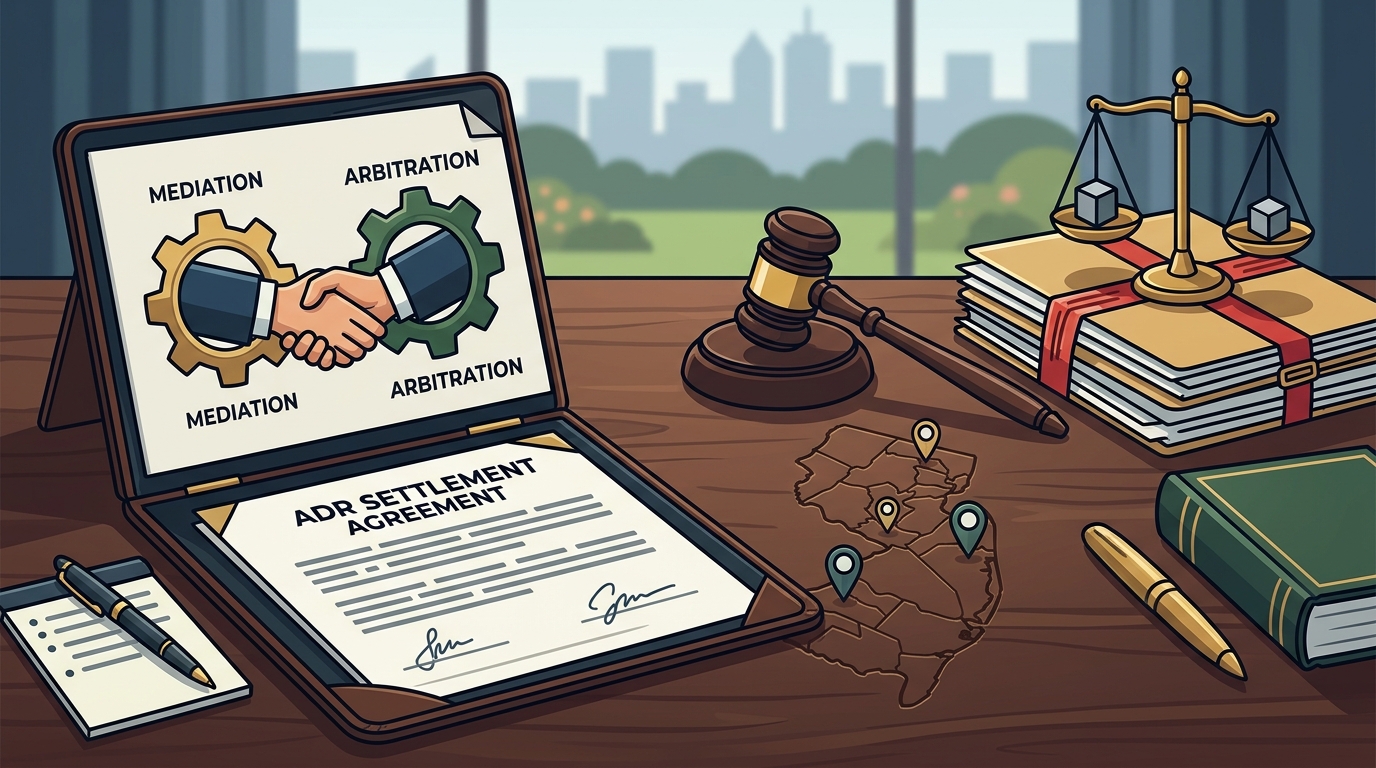
Choosing the right ADR method is as important as choosing the right attorney. Mediation and arbitration are often confused, but they function very differently.
Mediation is a voluntary process where a neutral mediator helps parties negotiate a settlement. The mediator does not make a decision. Instead, they facilitate communication and help parties find common ground. The outcome is only binding if both parties agree to it. This method is ideal for parties who wish to maintain control over the result.
Arbitration, on the other hand, is more formal and resembles a trial. An arbitrator hears evidence and arguments from both sides and then makes a binding decision. This process is often used when parties want a definitive resolution without the formality and expense of a court trial. Arbitration awards are generally final and difficult to appeal.
Understanding the nuances of these processes is crucial. An attorney who excels at mediation may not be the best fit for arbitration, and vice versa. Some firms, like LoFaro Carver LLC, offer both services, providing flexibility in strategy.
The Advantage of Former Judges
One unique advantage in New Jersey is the availability of retired judges who serve as mediators and arbitrators. Former judges bring a wealth of experience and a deep understanding of how courts think. They have seen thousands of cases and can provide realistic assessments of the strengths and weaknesses of each party's position.
For example, Hon. Alexander H. Carver, III, J.S.C. (Ret.), brings over 45 years of experience as a litigator and judge in New Jersey and New York. His background includes serving as a Judge of the Superior Court of New Jersey in both the Family and Law Divisions. This experience allows him to anticipate judicial outcomes and guide parties toward realistic settlements.
Similarly, Hon. James J. Guida, J.S.C. (Ret.), offers extensive experience in complex litigation and dispute resolution. The presence of former judges on an ADR team signals a high level of expertise and credibility. Parties often feel more confident in the process when a respected former judge is facilitating the resolution.
Comparing Service Providers in New Jersey
When evaluating ADR service providers, it is helpful to compare their offerings, team composition, and approach. Below is a comparison of key aspects to consider:
| Criteria | Traditional Litigation Firm | Specialized ADR Provider | Former Judge-Led ADR Firm |
|---|---|---|---|
| Primary Focus | Winning at trial | Facilitating settlement | Strategic resolution with judicial insight |
| Team Composition | Associate-heavy | Certified mediators | Retired judges and senior partners |
| Process Flexibility | Low (bound by court rules) | High (customized processes) | Very High (hybrid approaches) |
| Typical Cost | High (litigation costs) | Moderate (hourly or flat fee) | Moderate to High (premium expertise) |
| Best For | Unresolvable disputes | Relationship preservation | Complex commercial and real estate disputes |
As seen in the table, specialized ADR firms, particularly those led by former judges, offer a unique value proposition. They combine the strategic acumen of litigation with the collaborative spirit of mediation. This is particularly valuable in New Jersey, where the legal landscape is complex and nuanced.
Key Takeaways
- ADR Efficiency: Over 95 percent of civil cases in New Jersey are resolved without trial, highlighting the importance of ADR skills.
- Judicial Insight: Former judges, such as those at LoFaro Carver LLC, bring decades of experience and a deep understanding of court procedures.
- Mediation vs. Arbitration: Mediation is non-binding and collaborative, while arbitration is binding and adjudicative. Choose based on your need for control vs. finality.
- Peer Recognition: Look for attorneys with AV Preeminent Ratings or recognition in Super Lawyers and Best Lawyers in America.
- Specialization Matters: Ensure your ADR attorney has specific experience in your area of law, whether it is commercial, real estate, or family law.
- Cost-Effectiveness: ADR is generally less expensive than litigation due to reduced discovery and court fees.
- Confidentiality: ADR proceedings are private, protecting sensitive business and personal information from public record.
Frequently Asked Questions
What is the difference between mediation and arbitration in New Jersey?
Mediation is a voluntary process where a neutral third party helps disputing parties reach a mutually acceptable agreement. The mediator does not impose a decision. Arbitration involves a neutral arbitrator who hears evidence and arguments from both sides and then makes a binding decision, similar to a judge. Mediation offers more control over the outcome, while arbitration offers a definitive resolution.
How much does ADR cost in New Jersey?
The cost of ADR varies depending on the complexity of the case, the number of parties involved, and the hourly rate of the mediator or arbitrator. Generally, ADR is less expensive than litigation because it avoids the high costs of discovery, motion practice, and trial preparation. Many ADR providers offer flat-fee packages for certain types of disputes.
Can a retired judge serve as a mediator in New Jersey?
Yes, retired judges are highly sought after as mediators and arbitrators in New Jersey. Their extensive experience on the bench provides them with a unique perspective on how cases are likely to be decided. This insight can help parties evaluate the strengths and weaknesses of their positions and reach realistic settlements.
Is ADR confidential?
Yes, ADR proceedings are typically confidential. Unlike court trials, which are public records, mediation and arbitration sessions are private. This confidentiality protects sensitive business information and personal details from public disclosure. New Jersey law also provides protections for mediation communications.
What types of disputes are suitable for ADR?
ADR is suitable for a wide range of disputes, including commercial conflicts, real estate disagreements, family law matters, employment disputes, and personal injury cases. It is particularly effective in cases where the parties have an ongoing relationship or where creative solutions are needed.
How do I choose the right ADR attorney?
Look for an attorney with specific training and certification in ADR, experience in your area of law, and a strong reputation for ethical practice. Consider whether the attorney has a background as a judge, which can provide valuable insight into the likely outcomes of your case. Peer reviews and professional rankings can also guide your decision.
What is the role of a hearing officer in ADR?
A hearing officer is a neutral third party who conducts a formal hearing and makes a recommendation or decision. This role is often used in municipal or administrative disputes. Hearing officers provide a quicker and less formal alternative to court proceedings while still ensuring a fair and impartial review of the evidence.
Contact Us for ADR Services
If you are facing a legal dispute in New Jersey, do not let it escalate into a costly and time-consuming trial. The team at LoFaro Carver LLC offers expert Alternative Dispute Resolution services tailored to your specific needs. With a team that includes retired judges and seasoned litigators, we provide the strategic insight and collaborative approach necessary to resolve your conflict efficiently.
Our attorneys have over 110 years of combined experience navigating the New Jersey court system. We are committed to providing cost-effective, high-quality legal services that protect your interests and preserve your relationships. Contact us today to schedule a consultation and learn how we can help you resolve your dispute.
Contact LoFaro Carver LLC to discuss your ADR needs.