

Navigating the New Jersey Court System for Real Estate Litigation
Real estate disputes in New Jersey are uniquely complex due to the state's dense regulatory environment and layered court structure. According to recent legal industry analyses, over 40% of commercial property conflicts in the Garden State escalate to formal litigation rather than settling early, driven by high property values and strict zoning laws. Understanding the specific pathways through the New Jersey judiciary is not merely a legal formality; it is a strategic imperative that can determine the financial outcome of your case. This guide provides a definitive roadmap for property owners, developers, and investors seeking to resolve conflicts efficiently. (About Us New Jersey)
Understanding Jurisdiction and Court Levels
The New Jersey court system is hierarchical, and selecting the correct venue is the first critical step in any real estate dispute. Misfiling can result in immediate dismissal or significant delays, costing clients valuable time and resources. The system is broadly divided into trial courts and appellate courts, each with distinct roles in property law. (Blog New Jersey Attorneys)
The Superior Court: Trial Level Authority
Most significant real estate litigation begins in the Superior Court of New Jersey. This court is divided into two primary divisions relevant to property disputes: the Law Division and the Chancery Division. The Law Division handles general civil matters, including contract disputes, landlord-tenant issues, and personal injury claims related to property conditions. The Chancery Division, however, is often the preferred venue for complex commercial real estate transactions, land use disputes, and equity matters. (Attorneys New Jersey Attorneys)
Land use litigation, which involves zoning variances, permits, and municipal challenges, is particularly sensitive to jurisdictional rules. These cases often require specialized knowledge of municipal law and local ordinances. For instance, the LG Headquarters case, presided over by Hon. Alexander H. Carver, III, J.S.C. (Ret), set significant precedents in land use approvals, demonstrating how high-stakes commercial developments are adjudicated in the Bergen Vicinage. Such cases highlight the importance of having counsel who understands the nuances of municipal court interactions. (Business and Corporate Law)
Municipal and Appellate Courts
While the Superior Court handles major disputes, many real estate conflicts originate in Municipal Court, particularly in landlord-tenant evictions or minor code violations. However, for complex commercial litigation, starting at the Superior Court level is standard. Appeals from these decisions move to the New Jersey Appellate Division, which reviews legal errors but does not re-examine factual evidence. Understanding this flow is essential for setting realistic expectations regarding the timeline of your case.
Specialized Dockets and Commercial Courts
New Jersey has recognized the complexity of commercial real estate disputes and has implemented specialized dockets to handle them more efficiently. These programs are designed to reduce backlog and ensure that judges with specific expertise oversee complex financial and property matters.
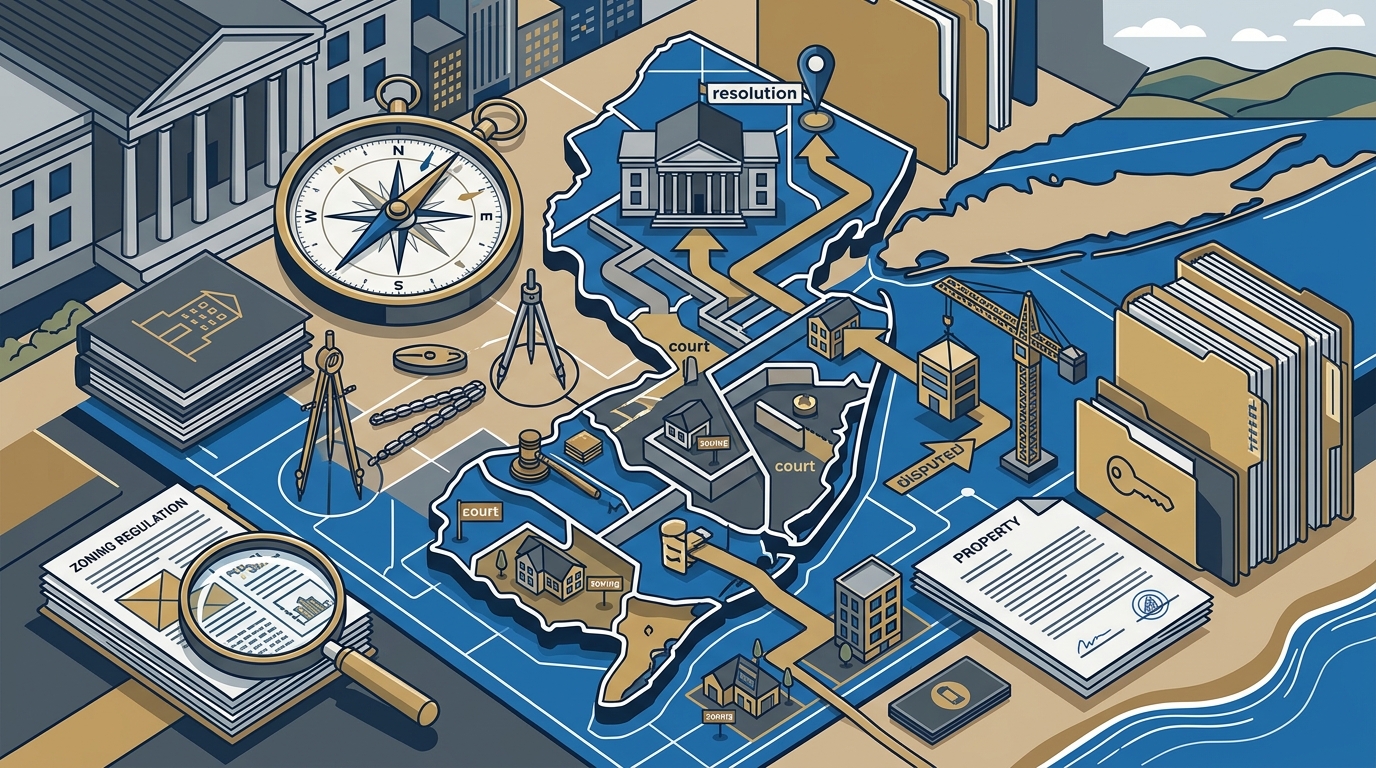
The Commercial Litigation Docket
The Commercial Litigation Docket (CLD) is available in certain counties, including Bergen, where LoFaro Carver LLC is based. This docket allows parties to request expedited handling of complex commercial cases, including those involving real estate development, joint ventures, and large-scale construction contracts. To qualify, cases must meet specific monetary thresholds and complexity criteria. The benefit of the CLD is a streamlined discovery process and a dedicated judge who understands the commercial context, leading to faster resolutions.
Land Use and Municipal Court Interactions
For disputes involving zoning boards or municipal decisions, the path often involves administrative appeals followed by judicial review. This process requires precise adherence to statutory deadlines, which can be as short as 45 days from the final decision of the zoning board. Missing these deadlines can waive your right to appeal entirely. Experienced counsel must navigate these procedural traps while simultaneously preparing the substantive legal arguments regarding property rights and municipal authority.
Alternative Dispute Resolution (ADR) Options
Given the high costs and unpredictability of trial, Alternative Dispute Resolution (ADR) has become a cornerstone of New Jersey real estate litigation. ADR offers confidential, flexible, and often faster resolutions than traditional court proceedings. At LoFaro Carver LLC, we prioritize ADR to resolve conflicts efficiently without sacrificing client interests.
Mediation: Facilitated Negotiation
Mediation involves a neutral third party who facilitates negotiation between disputing parties. The mediator does not impose a decision but helps the parties find common ground. In real estate disputes, mediation is particularly effective for boundary disagreements, contract interpretations, and partnership dissolutions. The flexibility of mediation allows for creative solutions that courts cannot order, such as structured payment plans or shared usage agreements.
Arbitration: Binding Decisions
Arbitration is more formal than mediation and results in a binding decision made by an arbitrator. Many commercial real estate contracts include mandatory arbitration clauses. This process is generally faster than litigation and offers privacy, as proceedings are not part of the public record. However, the scope for appeal is extremely limited, making the selection of a qualified arbitrator critical. Our team, including retired judges with extensive arbitration experience, provides strategic guidance on when to accept arbitration awards and when to challenge them.
Investigations and Special Masters
In complex technical disputes, such as construction defects or environmental contamination, the court may appoint a Special Master or Hearing Officer. These experts investigate facts and make recommendations to the judge. This process ensures that technical details are accurately assessed, reducing the burden on the court and providing a clearer path to resolution. We have successfully represented clients in court-appointed special master proceedings, leveraging our deep understanding of technical evidence to secure favorable outcomes.
The Litigation Lifecycle in NJ
Navigating the litigation lifecycle requires meticulous planning and execution. Each phase presents unique challenges and opportunities that can impact the final outcome of your real estate dispute.
Pre-Litigation Strategy and Demand Letters
Before filing a complaint, a thorough pre-litigation strategy is essential. This includes gathering all relevant documents, such as deeds, contracts, zoning approvals, and correspondence. A well-drafted demand letter can often resolve disputes without formal litigation, saving time and money. Our firm conducts comprehensive due diligence to assess the strengths and weaknesses of your case before initiating any legal action.
Discovery and Motion Practice
Discovery is the phase where both parties exchange information and evidence. In real estate cases, this often involves extensive document review, depositions of key witnesses, and expert reports. Motion practice, such as motions for summary judgment, can resolve issues without a full trial. Effective motion practice requires precise legal writing and a deep understanding of New Jersey court rules. We utilize advanced legal research tools and strategic briefing to maximize the impact of our motions.
Trial and Post-Trial Motions
If the case proceeds to trial, preparation is key. Trials in New Jersey are bench trials (judge-only) in most complex real estate matters, as juries may lack the technical expertise to evaluate complex commercial or zoning issues. Post-trial motions allow parties to challenge the judge's findings or request a new trial. These motions must be filed promptly and with strong legal arguments. Our team has extensive trial experience, including handling high-stakes commercial and land use cases in both state and federal courts.
Critical Strategic Considerations
Success in New Jersey real estate litigation depends on more than just legal knowledge; it requires strategic foresight and operational excellence. Several factors can significantly influence the trajectory of your case.
Jurisdictional Nuances and Venue Selection
Choosing the right county and division can impact the speed and outcome of your case. Counties with specialized commercial dockets may offer faster resolutions. Additionally, local court cultures and judicial preferences can vary, making it important to select counsel with experience in the specific venue where your case will be heard.
Cost Management and Fee Structures
Real estate litigation can be expensive. Understanding fee structures, including hourly rates, contingency fees, and flat-fee options for specific services, is crucial. We offer transparent pricing and cost-effective strategies to align legal services with your budget. Our goal is to provide high-quality representation while managing your financial exposure.
Regulatory Compliance and Zoning Laws
New Jersey's zoning and land use regulations are among the most complex in the nation. Non-compliance can lead to severe penalties, including fines, injunctions, and forced demolition. Our team stays current with regulatory changes and municipal ordinances to ensure your projects remain compliant. We also assist with permit applications and variance requests to prevent disputes before they arise.
Key Takeaways
- Jurisdiction Matters: Correctly identifying the appropriate court (Law vs. Chancery Division) is critical for efficient case handling.
- ADR is Viable: Mediation and arbitration can resolve disputes faster and more privately than trial, often at lower cost.
- Specialized Dockets: The Commercial Litigation Docket offers expedited handling for complex commercial real estate cases.
- Deadline Sensitivity: Appeals from zoning boards have strict 45-day deadlines; missing them waives your rights.
- Experience Counts: Counsel with judicial or deep litigation experience, such as retired judges, provides strategic advantages in complex cases.
- Cost Transparency: Understand fee structures early to manage legal expenses effectively.
- Regulatory Expertise: Navigating NJ zoning laws requires specialized knowledge to avoid compliance pitfalls.
Frequently Asked Questions
What is the difference between the Law and Chancery Divisions in NJ?
The Law Division handles general civil matters like contracts and personal injury, while the Chancery Division deals with equity matters, including complex commercial real estate, land use, and corporate disputes. Choosing the correct division is vital for proper case management.
Can I appeal a zoning board decision in New Jersey?
Yes, but you must file within 45 days of the final decision. This strict deadline is enforced by law, and missing it typically results in the loss of appeal rights. Immediate legal consultation is recommended after receiving an adverse zoning decision.
What is the Commercial Litigation Docket?
The CLD is a specialized program in certain NJ counties that provides expedited handling for complex commercial cases. It requires meeting specific monetary and complexity thresholds but offers faster resolution and dedicated judicial oversight.
How does mediation differ from arbitration?
Mediation is a non-binding negotiation facilitated by a neutral party, allowing for creative solutions. Arbitration is a binding process where an arbitrator makes a final decision, similar to a trial but more private and informal.
Why is judicial experience important in real estate litigation?
Judges with prior experience understand the procedural nuances and strategic considerations of complex cases. Retired judges, for example, bring decades of insight into how courts evaluate evidence and arguments, which can be leveraged by opposing counsel for strategic advantage.
What types of real estate disputes are best suited for ADR?
Boundary disputes, contract interpretations, partnership dissolutions, and construction defects are often well-suited for ADR. These cases benefit from the flexibility and confidentiality of mediation or arbitration, avoiding the public nature of trial.
How long does real estate litigation typically take in NJ?
Timelines vary widely based on complexity and court backlog. Simple cases may resolve in months, while complex commercial litigation can take years. Utilizing specialized dockets or ADR can significantly reduce this timeline.
Contact Our Team for Expert Representation
Navigating the New Jersey court system for real estate litigation requires precision, experience, and strategic foresight. Whether you are facing a complex land use dispute, a commercial contract breach, or a landlord-tenant conflict, our team is equipped to guide you through every step of the process. We combine decades of judicial and litigation experience with a client-focused approach to deliver results.
Do not let procedural complexities derail your real estate goals. Contact LoFaro Carver LLC today to schedule a consultation. Our attorneys are ready to provide the top-quality legal services and personal attention you deserve. Visit our Real Estate Law page to learn more about our specific services, or review our About Us section to understand our firm's history and values. For immediate assistance, call us at (201) 498-0400 or explore our Alternative Dispute Resolution options to resolve your dispute efficiently.