

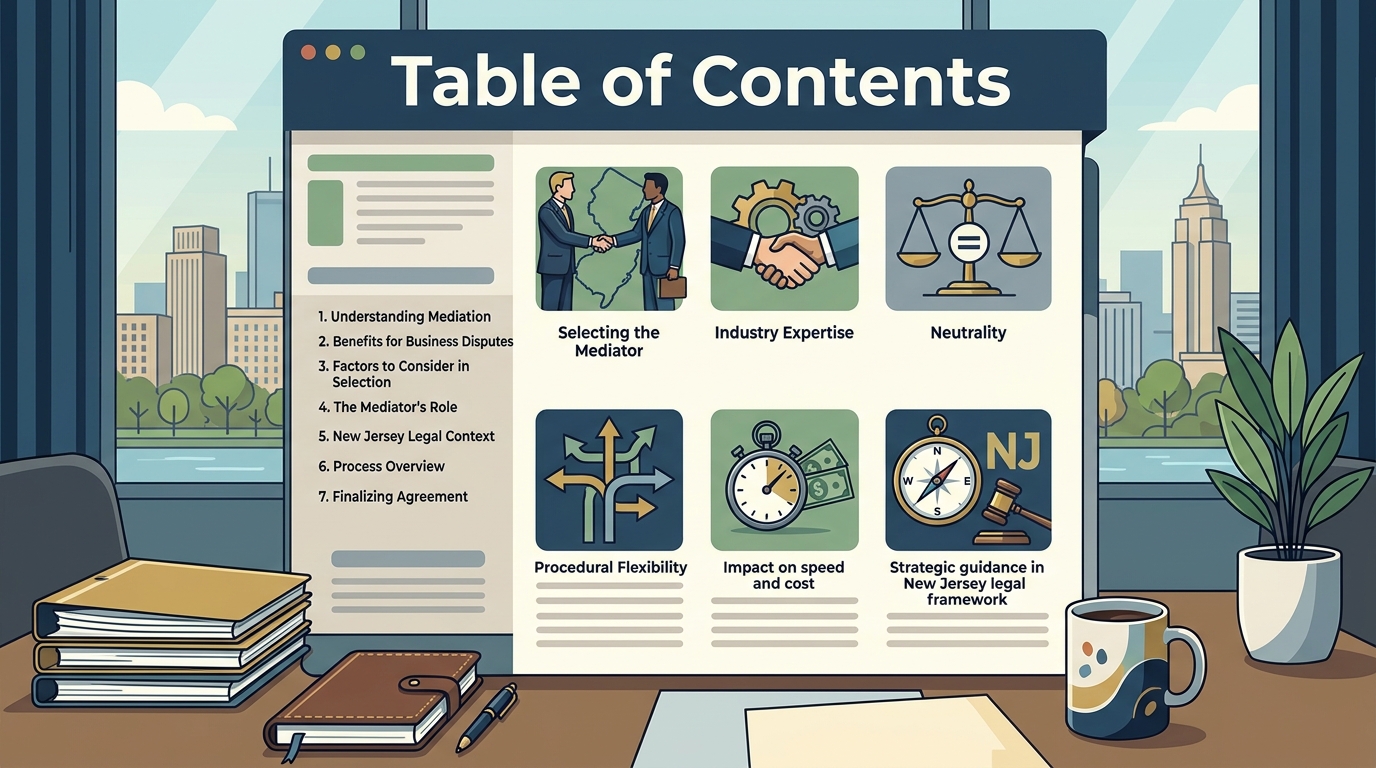
Selecting the right private mediator in New Jersey requires evaluating industry expertise, neutrality, and procedural flexibility. The correct choice significantly impacts the speed and cost of resolving commercial conflicts. LoFaro Carver LLC provides strategic guidance for navigating these critical decisions within the state's legal framework.
Understanding the Role of a Private Mediator
Private mediation is a voluntary process where a neutral third party facilitates negotiation between disputing business entities. Unlike litigation, the mediator does not impose a binding decision. Instead, they guide the parties toward a mutually acceptable resolution. This distinction is crucial for preserving ongoing business relationships.
In New Jersey, the choice of mediator often dictates the tone of the negotiation. A private mediator operates outside the formal court system, offering greater confidentiality. This environment allows executives to discuss sensitive financial data without public record. The flexibility of private mediation supports complex commercial structures that might be difficult to address in a standard courtroom setting.
LoFaro Carver LLC emphasizes the importance of understanding this dynamic. Our attorneys advise clients on when to engage a private mediator versus pursuing formal arbitration. The goal is to align the dispute resolution method with the specific commercial objectives of the business.
Evaluating Industry Expertise and Background
Industry knowledge is a primary factor in selecting a mediator for business disputes. A mediator with experience in a specific sector understands the operational realities of that industry. For example, a mediator familiar with construction contracts knows the nuances of delay claims and change orders. This expertise helps the mediator identify viable solutions that a generalist might miss.
Consider the background of the mediator. Many private mediators are retired judges or senior attorneys. These individuals bring a deep understanding of legal standards and procedural rules. However, their prior roles may influence their negotiation style. A former judge might be more decisive, while a former business executive might focus on operational viability.
At LoFaro Carver LLC, we often work with mediators who have specific backgrounds in commercial litigation. This ensures that the mediation process is informed by a realistic understanding of the legal risks involved. The mediator's ability to bridge the gap between legal theory and business practice is essential for a successful outcome.
Assessing Neutrality and Impartiality
Neutrality is the cornerstone of any mediation process. A private mediator must remain impartial throughout the negotiation. This requires a thorough conflict check before the process begins. The mediator should have no prior professional or personal relationships with either party. Any perceived bias can undermine the trust necessary for open communication.
Transparency in the mediator's background is vital. Parties should request a detailed resume and a list of prior cases. This allows for a review of potential conflicts of interest. In New Jersey, ethical standards for mediators are high, but private engagements require additional diligence. The mediator should disclose any financial interests or prior associations that could affect their judgment.
LoFaro Carver LLC conducts rigorous conflict checks when recommending mediators for our clients. We ensure that the selected individual has no ties to the opposing party or their counsel. This step is critical for maintaining the integrity of the mediation process and ensuring a fair negotiation environment.
Considering Procedural Flexibility and Logistics
Logistics also play a significant role. The mediator should be experienced in managing complex multi-party disputes. This includes coordinating with multiple attorneys and business representatives. The ability to structure caucuses and joint sessions effectively is a mark of a skilled mediator. In New Jersey, where business disputes often involve multiple stakeholders, this skill is particularly valuable.
Our team at LoFaro Carver LLC advises clients on the logistical aspects of mediation. We help define the ground rules and ensure that all parties are prepared for the process. This preparation is essential for maximizing the efficiency of the mediation and achieving a timely resolution.
Aligning Mediation with Legal Strategy
Mediation should not occur in a vacuum. It must be integrated into a broader legal strategy. The mediator's role is to facilitate, but the legal counsel's role is to protect the client's interests. A successful mediation requires close coordination between the mediator and the attorneys. The mediator should respect the legal boundaries set by the parties' counsel.
In New Jersey, the outcome of a mediation can have legal implications. A settlement reached in mediation is typically binding if reduced to a written agreement. However, the process itself is generally confidential. This confidentiality encourages open dialogue but requires careful management of information. Parties should understand how the mediation process interacts with any ongoing or potential litigation.
LoFaro Carver LLC provides comprehensive support throughout the mediation process. Our attorneys work closely with the mediator to ensure that the settlement terms are legally sound and enforceable. This collaborative approach helps clients achieve a resolution that protects their long-term business interests.
Key Takeaways
- Private mediation offers confidentiality and flexibility, which are critical for preserving business relationships.
- Industry expertise in the mediator helps identify practical solutions that align with operational realities.
- Neutrality and impartiality must be verified through thorough conflict checks and background reviews.
- Procedural flexibility allows parties to tailor the mediation process to their specific dispute.
- Mediation should be integrated into a broader legal strategy to ensure enforceable outcomes.
- LoFaro Carver LLC provides strategic guidance and support throughout the mediation process.
Frequently Asked Questions
What is the difference between private mediation and court-annexed mediation?
Private mediation is voluntarily initiated by the parties and conducted by a mutually agreed-upon mediator. Court-annexed mediation is ordered by the court and conducted by a mediator from the court's list. Private mediation offers more control over the process and confidentiality.
How do I find a qualified private mediator in New Jersey?
You can search for mediators through professional organizations or legal directories. It is also advisable to consult with your legal counsel for recommendations. Look for mediators with relevant industry experience and a strong track record of successful resolutions.
Is mediation confidential in New Jersey?
Yes, mediation communications are generally confidential under New Jersey law. This confidentiality encourages open dialogue and protects sensitive business information. However, the final settlement agreement is typically binding and enforceable.
Can a private mediator impose a decision on the parties?
No, a mediator's role is to facilitate negotiation, not to impose a decision. The parties retain control over the outcome. If the parties cannot reach an agreement, the dispute may proceed to arbitration or litigation.
How much does private mediation cost in New Jersey?
Costs vary depending on the mediator's experience and the complexity of the dispute. Mediators typically charge an hourly rate. It is important to discuss fees and billing arrangements with the mediator before the process begins.
What should I prepare for a private mediation?
You should prepare a clear statement of your position, supporting documents, and a list of potential settlement options. It is also important to define your goals and bottom line before the mediation begins. Your legal counsel can help you prepare effectively.