

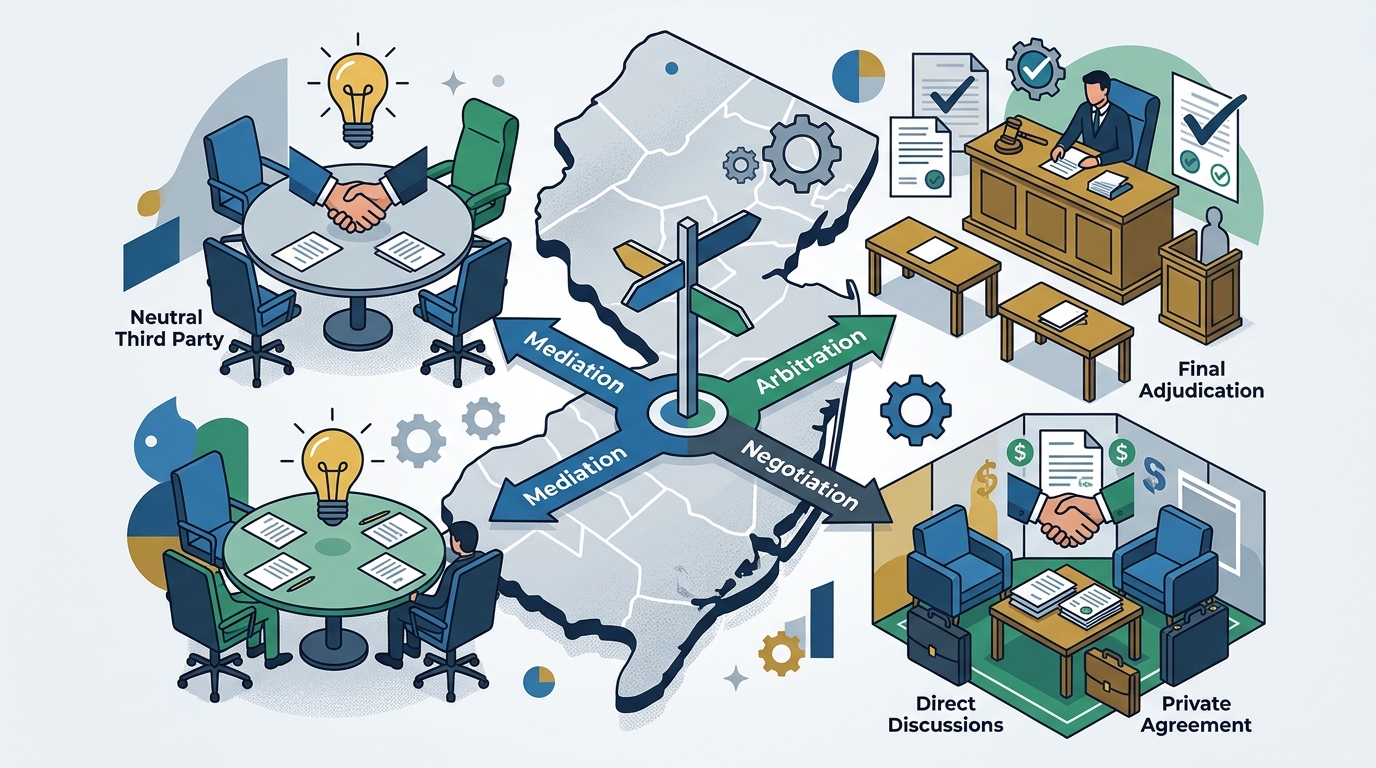
Choosing the right path to resolve a legal conflict depends on your control over the outcome, the need for confidentiality, and the finality of the decision. Mediation is a voluntary process where a neutral third party helps parties reach a mutually acceptable agreement. Arbitration is a private adjudication where a neutral arbitrator renders a binding or non-binding decision. Negotiation is a direct discussion between parties to resolve a dispute without third-party intervention. At LoFaro Carver LLC, we guide clients through these options to select the strategy that best protects their interests and aligns with their business or personal goals.
Negotiation: The Direct Approach
Negotiation is the most common and least formal method of dispute resolution. It involves direct communication between the disputing parties, often with the assistance of their attorneys, to reach a settlement. The primary advantage of negotiation is cost efficiency. Parties avoid the fees associated with court filings, discovery, and third-party neutrals. However, negotiation can fail if there is a significant power imbalance or a breakdown in trust between the parties.
In New Jersey, many commercial and civil disputes begin with a mandatory or voluntary negotiation phase. For example, a breach of contract claim often starts with a demand letter, which is a formal negotiation tool. If the parties cannot agree on the terms of a settlement, the dispute may escalate to mediation or litigation. The key implication for clients is that negotiation preserves the relationship between the parties, which is critical for ongoing business partnerships or family matters.
Mediation: Facilitated Problem Solving
Mediation is a structured, confidential process where a neutral mediator facilitates communication between the parties. The mediator does not impose a decision but helps the parties identify their interests and explore potential solutions. This process is non-binding, meaning either party can walk away if a satisfactory agreement is not reached. Mediation is often court-ordered in New Jersey for civil cases, but it can also be voluntarily initiated by the parties.
The evidence for the effectiveness of mediation lies in its flexibility. Unlike a court trial, which is bound by strict rules of evidence and procedure, mediation allows parties to discuss creative solutions that a judge might not be able to order. For instance, in a business dispute, a mediation might result in a revised contract or a continued partnership, rather than a simple monetary judgment. LoFaro Carver LLC offers mediation services that are tailored to the specific needs of the parties, ensuring a fair and efficient process.
Arbitration: Private Adjudication
Arbitration is a formal, private process where a neutral arbitrator hears evidence and arguments from both sides and renders a decision. This decision, known as an award, is typically binding and enforceable in court. Arbitration is often chosen for its speed and finality. It is less formal than a court trial but more structured than mediation. The arbitrator acts as a private judge, applying the law to the facts of the case.
A concrete example of arbitration in New Jersey is the resolution of employment disputes. Many employment contracts include arbitration clauses that require disputes to be resolved through arbitration rather than litigation. This can be beneficial for employers who want to avoid the publicity of a court trial and for employees who want a faster resolution. However, the binding nature of arbitration means that the parties have limited rights to appeal the decision. Clients must carefully consider the trade-offs between speed and finality when choosing arbitration.
Comparing the Three Methods
Understanding the differences between negotiation, mediation, and arbitration is crucial for making an informed decision. The table below summarizes the key characteristics of each method.
| Method | Role of Third Party | Binding Nature | Cost | Confidentiality |
|---|---|---|---|---|
| Negotiation | None (or attorneys) | Binding if agreed | Low | High |
| Mediation | Facilitator | Non-binding | Moderate | High |
| Arbitration | Decision Maker | Binding | High | High |
The choice between these methods depends on the nature of the dispute. For simple monetary disputes, negotiation may be sufficient. For complex business disputes where the relationship is important, mediation is often the best choice. For disputes where finality and speed are priorities, arbitration may be the preferred option. LoFaro Carver LLC provides expert guidance on selecting the appropriate dispute resolution method for your specific situation.
Selecting the Right Strategy
Selecting the right dispute resolution strategy requires a careful analysis of the facts, the law, and the parties' goals. Factors to consider include the complexity of the case, the amount in controversy, the relationship between the parties, and the desired outcome. A skilled attorney can help you evaluate these factors and recommend the best course of action.
In New Jersey, the court system encourages the use of alternative dispute resolution (ADR) methods to reduce the backlog of cases. Many courts require parties to participate in mediation before proceeding to trial. This mandatory mediation can be a valuable opportunity to resolve the dispute without the cost and stress of a trial. LoFaro Carver LLC has extensive experience navigating the New Jersey court system, and our attorneys are well-versed in the nuances of ADR processes.
Key Takeaways
- Negotiation is the most cost-effective and flexible method, but it requires cooperation between the parties.
- Mediation is a non-binding process that helps parties reach a mutually acceptable agreement with the help of a neutral facilitator.
- Arbitration is a binding process where a neutral arbitrator renders a decision, offering speed and finality.
- The choice of method depends on the nature of the dispute, the relationship between the parties, and the desired outcome.
- Consulting with an experienced attorney is essential for selecting the right dispute resolution strategy.
- LoFaro Carver LLC provides expert guidance on ADR processes in New Jersey.
Frequently Asked Questions
Is mediation binding in New Jersey?
No, mediation is non-binding. The mediator helps the parties reach an agreement, but either party can walk away if they are not satisfied with the outcome. If an agreement is reached, it is typically formalized in a written contract, which is then binding.
Can I appeal an arbitration decision?
How much does mediation cost in New Jersey?
The cost of mediation varies depending on the complexity of the case and the mediator's fees. It is generally less expensive than litigation but more expensive than negotiation. Parties often split the cost of the mediator evenly.
Do I need a lawyer for arbitration?
Yes, it is highly recommended to have a lawyer for arbitration. Arbitration is a formal process with rules of evidence and procedure. A lawyer can help you present your case effectively and protect your rights.
Can I switch from mediation to arbitration?
Yes, if mediation fails to resolve the dispute, the parties can proceed to arbitration or litigation, depending on their agreement or the court's rules. It is important to have a clear plan for what happens if mediation is unsuccessful.
Conclusion
Resolving disputes effectively requires a strategic approach that considers the unique circumstances of each case. Whether you choose negotiation, mediation, or arbitration, the goal is to reach a fair and efficient resolution. LoFaro Carver LLC is committed to providing our clients with the guidance and support they need to navigate the dispute resolution process. Contact us today to schedule a consultation and discuss your options. Learn more: Contact Us New Jersey.