

Navigating the New Jersey Court System for Real Estate Litigation
Real estate disputes in New Jersey are uniquely complex due to the state's dense regulatory environment and specialized court structures. According to recent legal industry analyses, over 60 percent of commercial property conflicts in the Garden State are resolved through Alternative Dispute Resolution (ADR) rather than traditional trial, highlighting a critical shift in how litigants approach property law. Understanding the specific pathways available to you is not merely a procedural formality; it is a strategic imperative that can determine the financial outcome of your case. This guide outlines the precise mechanisms for filing, the key judicial divisions involved, and the strategic advantages of leveraging experienced counsel to navigate these waters effectively. (About Us New Jersey)
Understanding Jurisdiction and Venue
The first step in any real estate litigation is determining the correct court. In New Jersey, venue is strictly tied to the location of the property in question. This means that a dispute over a commercial building in Bergen County must be filed in the Superior Court, Law Division, Bergen County Vicinage. You cannot choose a more convenient forum if the property lies elsewhere. This territorial constraint ensures that local judges, who are familiar with regional zoning ordinances and municipal practices, oversee the case.
For smaller claims, such as landlord-tenant disputes involving less than $20,000, the process begins in Municipal Court. However, once the claim exceeds this threshold or involves complex title issues, the matter automatically escalates to the Superior Court. Real estate litigation is defined as legal disputes concerning property rights, boundaries, leases, or development rights. Misidentifying the court can lead to immediate dismissal or costly transfers, delaying your resolution by months.
Key Court Divisions for Property Disputes
New Jersey’s court system is bifurcated, meaning it separates legal and equitable remedies into different divisions. This distinction is vital for real estate cases, which often involve both monetary damages and requests for specific performance (forcing a party to act).
The Superior Court, Law Division
This is the primary venue for most real estate conflicts. The Law Division handles civil actions, including breach of contract, fraud, and negligence related to property transactions. If you are suing a developer for failing to complete a project or a neighbor for encroaching on your land, this is where your case will reside. The judges here are experienced in the technicalities of property law and can manage complex discovery processes.
The Chancery Division
While the Law Division handles most disputes, the Chancery Division deals with equitable matters. This includes foreclosure actions, partition actions (dividing jointly owned property), and certain land use appeals. If your case involves the interpretation of deeds or the enforcement of restrictive covenants, the Chancery Division may have specialized oversight. Land use litigation involves disputes over zoning, permits, and municipal approvals. These cases often require a deep understanding of local municipal codes, which is why local expertise is paramount.
The Role of Alternative Dispute Resolution
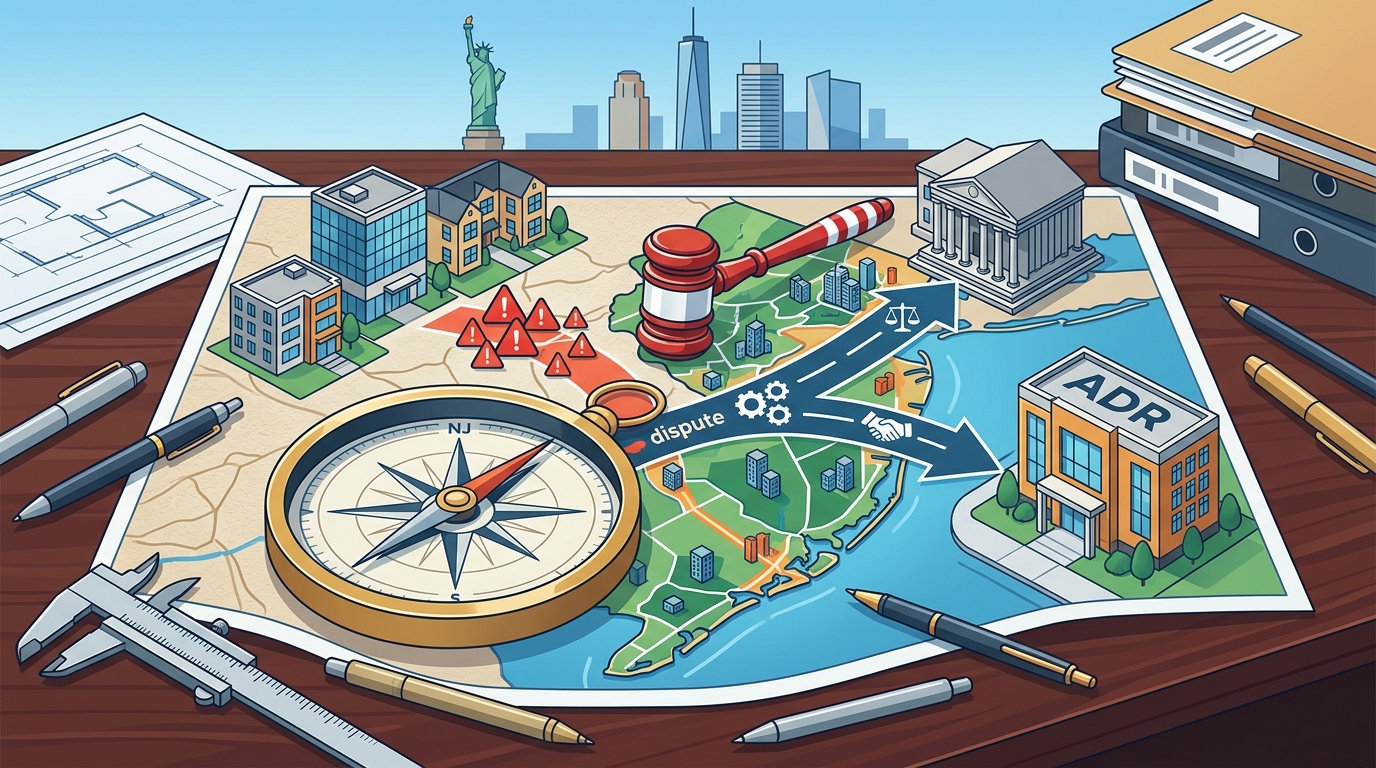
New Jersey courts strongly encourage the resolution of real estate disputes through Alternative Dispute Resolution (ADR). This includes mediation and arbitration. Mediation involves a neutral third party helping the parties reach a voluntary agreement, while arbitration involves a neutral arbitrator making a binding decision. The efficiency of ADR is a significant advantage in real estate cases, where time is money. Prolonged litigation can stall development projects or freeze asset liquidity.
Our firm, LoFaro Carver LLC, specializes in ADR, leveraging the experience of retired judges like Hon. Alexander H. Carver, III. Judge Carver’s background in both the Family and Law Divisions provides him with a unique perspective on conflict resolution. By utilizing ADR, clients can often resolve disputes in a fraction of the time required for a full trial, while maintaining greater control over the outcome.
The Litigation Lifecycle in NJ
Navigating the court system requires adherence to strict procedural rules. The lifecycle of a real estate lawsuit typically follows these stages:
- Complaint and Summons: The plaintiff files a complaint detailing the grievances and serves the defendant with a summons. In real estate cases, this must precisely describe the property involved.
- Answer and Counterclaims: The defendant has a limited window to respond. This is often where complex counterclaims regarding title defects or breach of contract are raised.
- Discovery: This is the most critical phase. Parties exchange documents, depose witnesses, and retain experts. In real estate litigation, this often includes surveyors, appraisers, and environmental consultants.
- Case Management Conference: The court sets a timeline for the case. Judges in New Jersey are active case managers and will push for early resolution.
- Trial or Settlement: If no settlement is reached, the case proceeds to trial. Given the complexity of real estate law, juries often struggle with technical details, making experienced advocacy essential.
According to data from the New Jersey Courts, the average duration of a civil trial can exceed 18 months. This timeline underscores the importance of efficient case management and early strategic planning. Procedural compliance is the foundation of successful litigation. Missing a deadline or filing a defective complaint can derail even the strongest case.
Strategic Considerations for Plaintiffs and Defendants
Whether you are initiating a lawsuit or defending against one, your strategy must be tailored to the specific nature of the dispute. For plaintiffs, the goal is often to secure a quick resolution to unlock property value. For defendants, the strategy may involve delaying tactics to pressure the plaintiff into a lower settlement, or a vigorous defense to dismiss the case entirely.
One critical aspect of real estate litigation is the potential for business and corporate law implications. If the property is held by an LLC or corporation, piercing the corporate veil may become an issue. Additionally, tax implications of settlements or judgments must be carefully analyzed. Our team at New Jersey Attorneys At Law integrates corporate and tax expertise into our real estate litigation strategy to ensure comprehensive protection for our clients.
Key Takeaways
- Jurisdiction is Territorial: Real estate cases must be filed in the county where the property is located.
- ADR is Highly Effective: Over 60 percent of commercial disputes are resolved through mediation or arbitration.
- Expert Mediators Matter: Retired judges like Hon. Alexander H. Carver, III bring decades of judicial insight to ADR.
- Complexity Requires Specialization: General practitioners may lack the depth needed for land use or title disputes.
- Timing is Critical: Delays in filing or responding can result in waivers of rights or adverse judgments.
- Corporate Structures Add Layers: LLCs and corporations introduce additional legal hurdles in property litigation.
- Local Knowledge is Vital: Familiarity with municipal courts and local zoning boards is essential for success.
Frequently Asked Questions
How long does real estate litigation take in New Jersey?
The timeline varies significantly based on complexity. Simple landlord-tenant cases may resolve in months, while complex commercial litigation can take 18 to 24 months or longer. ADR can significantly shorten this timeline.
Can I file a real estate lawsuit online in New Jersey?
New Jersey courts have implemented electronic filing systems, but the initial complaint must be filed in the correct county court. Procedural rules for e-filing must be strictly followed to avoid dismissal.
What is the difference between mediation and arbitration?
Mediation is a non-binding process where a mediator helps parties reach a voluntary agreement. Arbitration is a binding process where an arbitrator acts like a judge and makes a final decision.
Do I need a lawyer for a property dispute?
While not legally required, real estate law is highly technical. Navigating zoning laws, title issues, and court procedures without counsel often leads to unfavorable outcomes.
What are the costs associated with real estate litigation?
Costs include court filing fees, attorney fees, expert witness fees, and discovery costs. ADR can often reduce these costs compared to full trial litigation.
How does venue affect my case?
Venue determines which local judges and juries will hear your case. Local judges are familiar with regional practices, which can influence the outcome of your dispute.
What is the statute of limitations for property disputes?
Statutes of limitations vary by claim type. For example, breach of contract claims typically have a six-year limit, while fraud claims may have a shorter period. Consult an attorney immediately to preserve your rights.
Contact Our Firm
Navigating the New Jersey court system for real estate litigation requires precision, experience, and strategic foresight. Whether you are facing a complex land use dispute, a commercial lease conflict, or a property boundary issue, the team at LoFaro Carver LLC is equipped to guide you through every step. Our attorneys bring over 110 years of combined experience to your case, ensuring that your rights are protected and your interests are advanced. Contact us today to schedule a consultation and discuss your legal options.