

Alternative Dispute Resolution (ADR) has fundamentally transformed the legal landscape in New Jersey, offering a faster, more private, and often more cost-effective path to justice than traditional litigation. According to recent industry data, over 95 percent of civil cases in the United States are resolved through settlement or mediation, highlighting the critical importance of choosing the right legal representation for these processes. In New Jersey, where the court system is dense and procedural rules are strict, selecting an attorney with specific ADR expertise can mean the difference between a favorable outcome and a protracted, expensive legal battle. This guide provides a detailed framework for evaluating potential counsel, understanding the nuances of mediation and arbitration, and leveraging the unique advantages of experienced practitioners like those at LoFaro Carver LLC.
Understanding ADR in New Jersey
Alternative Dispute Resolution is not a single process but a collection of methods used to resolve disputes outside of the courtroom. In New Jersey, ADR is deeply integrated into the judicial system, with many counties requiring mediation before a case can proceed to trial. ADR is a structured process where a neutral third party helps disputing parties reach a mutually acceptable agreement. This definition underscores the collaborative nature of the practice, which stands in stark contrast to the adversarial nature of traditional litigation.
New Jersey courts actively encourage the use of ADR to reduce docket congestion and provide parties with more control over the outcome. Whether you are involved in a business dispute, a family law matter, or a personal injury claim, ADR offers flexibility that court proceedings cannot match. The process is generally confidential, allowing parties to discuss sensitive issues without fear of public record. Furthermore, the timeline for ADR is typically much shorter than waiting for a court date, which can take months or even years in busy jurisdictions like Bergen or Hudson counties.
Choosing the right lawyer for ADR requires understanding that the skills needed for mediation differ significantly from those required for trial advocacy. A successful ADR attorney must possess strong negotiation skills, emotional intelligence, and a deep understanding of the substantive law. They must be able to assess the strengths and weaknesses of both sides and guide their client toward a realistic resolution. This requires a blend of legal acumen and psychological insight, qualities that are honed through years of specialized practice.
Mediation vs. Arbitration: Knowing the Difference
Before selecting an attorney, it is crucial to understand the two primary forms of ADR: mediation and arbitration. While both are alternatives to litigation, they function very differently. Mediation is a voluntary process where a neutral mediator facilitates negotiation but does not impose a decision. The mediator helps the parties communicate, identify issues, and explore solutions. The outcome is entirely up to the parties, and any agreement reached is typically binding once signed.
Arbitration, on the other hand, is more formal and resembles a trial. An arbitrator hears evidence and arguments from both sides and then renders a decision, which is usually binding. This process is often used in commercial contracts where parties have agreed to arbitrate disputes in advance. The key distinction is that in mediation, the parties control the outcome, while in arbitration, the arbitrator does. Therefore, the type of ADR you need will dictate the type of lawyer you should hire.
For mediation, you want an attorney who is a skilled facilitator and negotiator. They should be able to remain impartial while still advocating for your interests. For arbitration, you need an attorney who is a formidable advocate, capable of presenting complex evidence and arguments in a concise and persuasive manner. Some firms, such as LoFaro Carver LLC, offer both mediation and arbitration services, providing clients with a comprehensive suite of ADR options tailored to their specific needs.
Key Selection Criteria for Your Attorney
Selecting the right ADR lawyer involves evaluating several critical factors. First, consider the attorney's experience with the specific type of dispute you are facing. A lawyer who specializes in business litigation may not be the best fit for a family law mediation, and vice versa. Look for an attorney who has a proven track record of success in your particular area of law.
Second, evaluate the attorney's reputation and credentials. Look for awards and recognitions that indicate peer respect, such as the AV Preeminent Rating from Martindale-Hubbell, which is given to attorneys who have achieved the highest level of professional excellence. Additionally, check if the attorney is listed in New Jersey Super Lawyers or Best Lawyers in America, as these lists are based on rigorous peer review processes.
Third, consider the attorney's approach to client service. ADR is a collaborative process, and you need a lawyer who communicates clearly and keeps you informed throughout the process. Ask about their availability, their fee structure, and their strategy for resolving your dispute. A good ADR attorney will explain the process in plain language and help you understand your options.
Finally, trust your instincts. You will be working closely with this attorney during a stressful time, so it is important that you feel comfortable with them. Schedule a consultation to discuss your case and gauge their responsiveness and empathy. Many firms, including New Jersey Attorneys At Law, offer initial consultations to help you determine if they are the right fit for your needs.
The Importance of Judicial Experience
One of the most valuable assets an ADR attorney can possess is prior judicial experience. Judges who transition into private practice bring a unique perspective to dispute resolution. They have seen thousands of cases, understand how judges think, and know what outcomes are realistic. This insider knowledge can be incredibly advantageous in negotiations.
For example, Hon. Alexander H. Carver, III, J.S.C. (Ret.), a Senior Partner at LoFaro Carver LLC, brings over 45 years of experience as a litigator and judge to his ADR practice. His service on the Superior Court of New Jersey, including roles in the Family and Law Divisions, gives him a deep understanding of the legal landscape. This experience allows him to effectively mediate complex disputes and guide parties toward realistic resolutions.
Similarly, Hon. James J. Guida, J.S.C. (Ret.) and Carmine LoFaro, Esq. bring their own extensive backgrounds to the firm. Collectively, the firm has over 110 years of combined experience navigating the New Jersey court system. This depth of knowledge ensures that clients receive strategic advice that is grounded in a realistic understanding of how disputes are likely to be resolved.
Judicial experience also lends credibility to the mediation process. Parties are often more willing to engage in good faith when they know the mediator has a deep understanding of the law and has presided over similar cases. This credibility can help break deadlocks and facilitate settlement. According to legal industry reports, mediators with judicial backgrounds are often perceived as more authoritative and fair, which can enhance the effectiveness of the process.
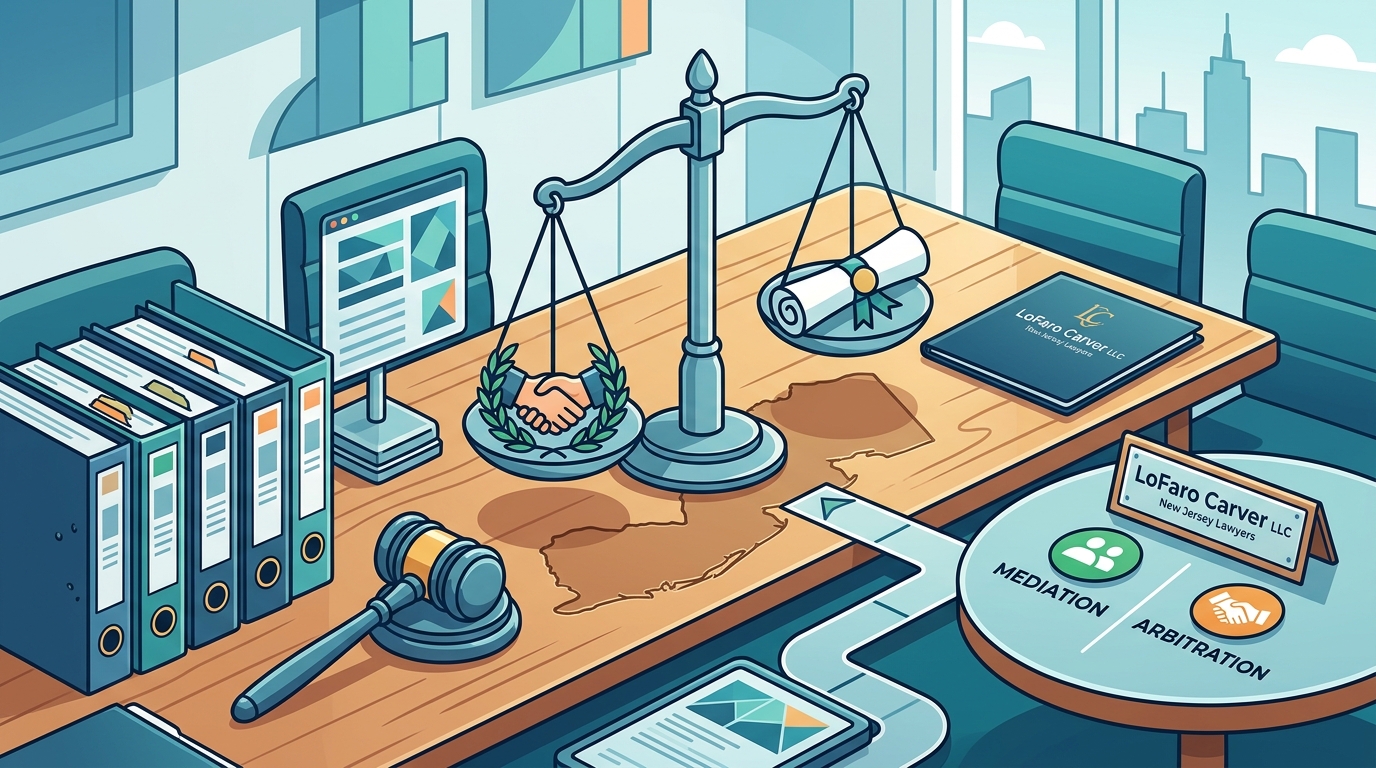
Comparing Service Models and Approaches
When evaluating ADR providers, it is helpful to compare their service models. Some firms offer traditional in-person mediation, while others provide virtual or hybrid options. The flexibility to choose the format that works best for your schedule and comfort level can be a significant advantage. LoFaro Carver LLC offers customized, in-person, virtual, and hybrid dispute resolution services to accommodate the needs of diverse clients.
Another factor to consider is the firm's approach to cost efficiency. ADR is often chosen to reduce legal expenses, so it is important to choose a provider that offers transparent and reasonable fees. Look for firms that provide clear fee structures and avoid hidden costs. Some firms may offer flat-fee packages for mediation, while others may charge by the hour. Understand the billing practices before engaging their services.
Additionally, consider the firm's resources and staffing. ADR can be a complex process that requires significant preparation and follow-up. A firm with adequate resources can provide the support needed to ensure a smooth and efficient process. This includes access to legal research tools, expert witnesses, and administrative support. A well-resourced firm can also handle the logistical aspects of the process, such as scheduling and document management, allowing you to focus on the substance of the dispute.
Key Takeaways
- ADR Efficiency: Over 95 percent of civil cases in the US are resolved through settlement or mediation, making ADR a critical skill for modern legal practice.
- Judicial Insight: Attorneys with prior judicial experience, such as those at LoFaro Carver LLC, bring unique credibility and strategic advantages to the mediation table.
- Combined Experience: The attorneys at LoFaro Carver LLC collectively possess over 110 years of experience in the New Jersey court system.
- Top Honors: The firm's attorneys have received the AV Preeminent Rating, a distinction given to the highest level of professional excellence by peers.
- Flexible Formats: Effective ADR providers offer in-person, virtual, and hybrid options to suit client needs and schedules.
- Specialized Expertise: Choosing an attorney with specific experience in your type of dispute (e.g., business, family, real estate) is crucial for a favorable outcome.
- Confidentiality: ADR processes are confidential, protecting sensitive business and personal information from public record.
Frequently Asked Questions
What is the difference between mediation and arbitration in New Jersey?
Mediation is a non-binding process where a neutral mediator helps parties negotiate a settlement, while arbitration is a more formal process where an arbitrator hears evidence and makes a binding decision. Mediation gives parties control over the outcome, whereas arbitration delegates that power to the arbitrator.
Why is judicial experience important for an ADR lawyer?
Judicial experience provides attorneys with a deep understanding of how judges evaluate cases, what outcomes are realistic, and how to effectively communicate with the court. This insight can significantly enhance their ability to mediate disputes and advise clients on settlement strategies.
How much does ADR typically cost in New Jersey?
The cost of ADR varies depending on the complexity of the dispute, the number of parties involved, and the attorney's fees. However, ADR is generally less expensive than traditional litigation because it is faster and requires less discovery and court time. Many firms offer transparent fee structures to help clients budget for the process.
Can I use ADR for a business dispute in New Jersey?
Yes, ADR is widely used for business disputes in New Jersey. It is particularly effective for commercial litigation, contract disputes, and partnership conflicts. Many business contracts include clauses requiring arbitration or mediation for dispute resolution.
What types of disputes can be resolved through ADR?
ADR can be used for a wide range of disputes, including family law matters, personal injury claims, real estate conflicts, and business litigation. The flexibility of ADR makes it suitable for almost any type of legal dispute where parties are willing to negotiate.
How long does the ADR process take?
The timeline for ADR depends on the complexity of the case and the willingness of the parties to cooperate. However, ADR is typically much faster than litigation, which can take months or years to reach trial. Many ADR processes can be completed in a matter of weeks or a few months.
Is ADR confidential?
Yes, ADR is generally confidential. Unlike court proceedings, which are part of the public record, ADR discussions and settlements are private. This confidentiality protects sensitive information and allows parties to speak openly about their interests and concerns.
Contact Us for a Consultation
Choosing the right lawyer for Alternative Dispute Resolution is a critical decision that can impact the outcome of your case. By understanding the differences between mediation and arbitration, evaluating the importance of judicial experience, and considering the service models of potential providers, you can make an informed choice. The attorneys at LoFaro Carver LLC are dedicated to providing efficient, cost-effective, and impartial dispute resolution services. With over 110 years of combined experience and a commitment to excellence, we are well-equipped to help you navigate the complexities of ADR in New Jersey. Contact us today to schedule a consultation and learn how we can assist you in resolving your dispute.