

How to Navigate the New Jersey Court System for Real Estate Litigation
Real estate disputes in New Jersey can involve everything from breach of contract and boundary disagreements to zoning challenges and foreclosure actions. Whether you are a homeowner, investor, or commercial developer, understanding how the New Jersey court system works is essential before filing or defending a lawsuit. With over 110 years of combined legal experience, the attorneys at LoFaro Carver LLC guide clients through every stage of real estate litigation, from initial complaint to final judgment. This guide walks you through the key steps, court structures, and strategies you need to know.
Common Types of Real Estate Disputes in NJ
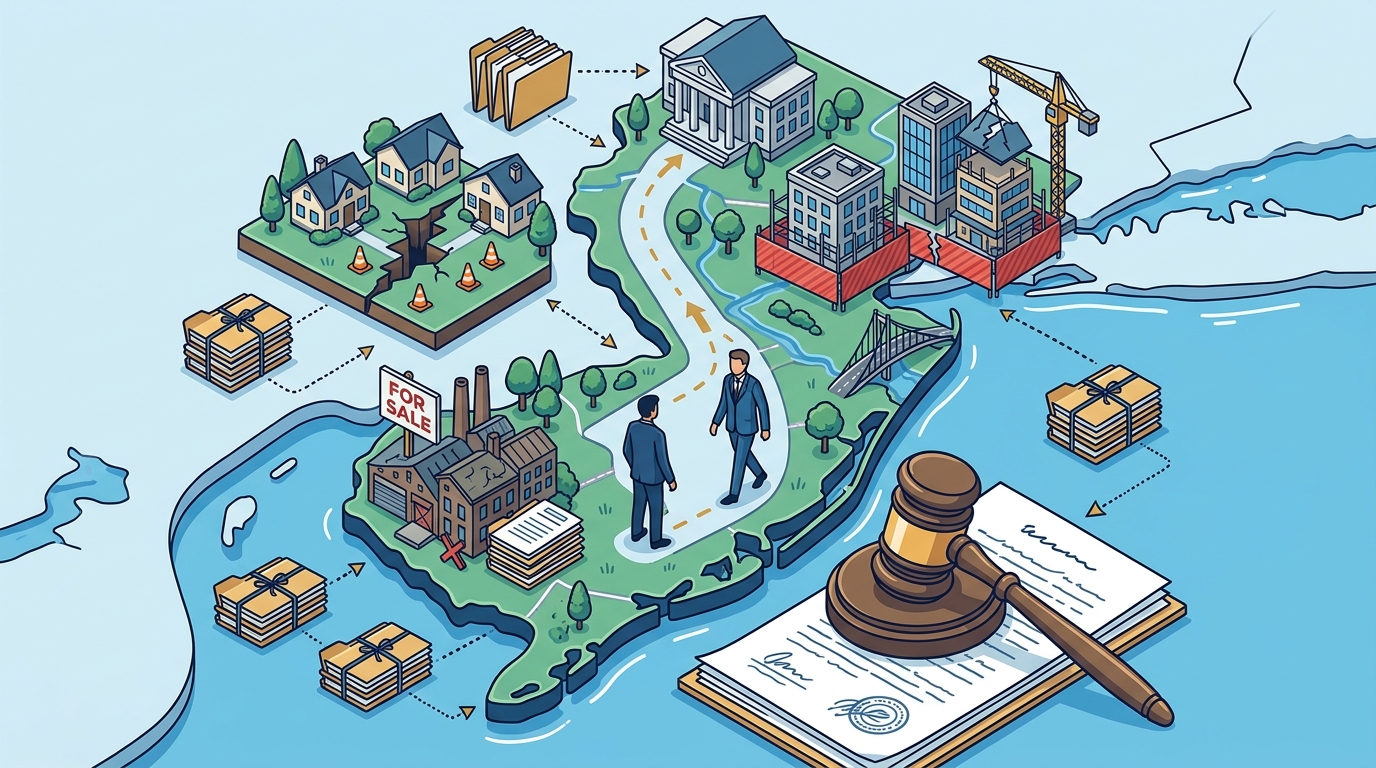
Real estate litigation is a broad category covering lawsuits that arise from the ownership, sale, use, or development of property. In New Jersey, the most frequent disputes include:
- Contract disputes over purchase price, closing conditions, or seller disclosures.
- Boundary and title disputes requiring surveys or quiet-title actions.
- Landlord-tenant conflicts involving lease violations, security deposits, or evictions.
- Zoning and land use challenges, which LoFaro Carver handles through its dedicated land use practice.
- Construction defect claims between developers, contractors, and property owners, an area covered by the firm's construction law team.
Each dispute type follows a slightly different procedural path, but all share a common starting point: identifying the correct court.
Understanding the New Jersey Court Structure
The New Jersey Superior Court is the primary trial-level court for real estate cases. It handles contract disputes, real estate transaction issues, evictions, and more. The Superior Court contains several divisions relevant to property matters:
Law Division, Civil Part
The Civil Part hears cases seeking monetary damages above $20,000. Most breach-of-contract and property damage claims land here. A Civil Case Information Statement (CIS) must be filed alongside the complaint to classify the case type and complexity.
Chancery Division, General Equity
General equity cases involve non-monetary remedies such as specific performance of a real estate contract, injunctions to stop construction, or partition actions to divide co-owned property. Equity cases are decided by a judge rather than a jury.
Special Civil Part
For claims of $20,000 or less, cases are filed in the Special Civil Part. Small claims (up to $5,000) follow a simplified process within this division.
| Division | Claim Type | Monetary Threshold | Jury Available? |
|---|---|---|---|
| Law Division, Civil Part | Monetary damages (breach of contract, negligence) | Over $20,000 | Yes |
| Chancery Division, General Equity | Non-monetary relief (specific performance, injunctions) | No minimum | No (judge only) |
| Special Civil Part | Smaller monetary claims | $5,001 - $20,000 | Yes |
| Small Claims | Minor monetary claims | Up to $5,000 | No |
All foreclosure cases in New Jersey are filed with the Superior Court Clerk's Office in Trenton, with uncontested matters handled by the Office of Foreclosure.
Step 1: Filing a Complaint
The litigation process begins when the plaintiff files a complaint in the appropriate New Jersey court. The complaint must outline the facts of the dispute, the legal claims being made, and the relief sought. You will also need to submit a Civil Case Information Statement and pay the applicable filing fee.
Once filed, the defendant must be properly served with a summons and complaint. New Jersey Court Rules require service within a specific time frame, and failure to serve properly can delay or derail a case. An experienced litigation attorney ensures these procedural requirements are met from day one.
Step 2: The Discovery Process
Discovery is the pre-trial phase where both parties exchange relevant information and documents. This stage often determines the outcome of a real estate case. Key discovery tools include:
- Interrogatories: Written questions the opposing party must answer under oath.
- Requests for production: Demands for contracts, title documents, surveys, emails, and financial records.
- Depositions: Sworn, in-person testimony from parties or witnesses before trial.
Building a strong factual record during discovery is critical. Detailed evidence, including property surveys, expert appraisals, and communication records, can make or break your case at trial or settlement negotiations.
Step 3: Motions, Trial, and Judgment
Summary Judgment
A motion for summary judgment is a written request asking the court to rule without a full trial. Summary judgment is appropriate when there are no genuine disputes over the key facts and one party is entitled to judgment as a matter of law. These motions can resolve cases faster and reduce litigation costs significantly.
Trial
If summary judgment is denied, the case proceeds to trial. In New Jersey real estate litigation, trials may be heard by a judge or jury depending on the division and the nature of the claim. Both sides present opening statements, introduce evidence, call witnesses, and make legal arguments. In civil actions, a jury typically consists of six people unless the court orders otherwise.
Appeals
An appeal is a written request asking a higher court to review a judge's decision. The Appellate Division of the Superior Court reviews judgments from the trial court. Appeals focus on legal errors rather than re-examining facts.
When to Consider Alternative Dispute Resolution
Alternative dispute resolution (ADR) is a set of methods for resolving legal conflicts outside of a traditional courtroom trial. ADR includes mediation, arbitration, and negotiation. Many New Jersey real estate contracts include mandatory arbitration clauses, making ADR the required first step before litigation.
LoFaro Carver's alternative dispute resolution practice offers clients a cost-effective path to settle property disputes. The firm's Hon. Alexander H. Carver, III, J.S.C. (Ret.) and Hon. James J. Guida, J.S.C. (Ret.) bring judicial experience directly to the mediation table, giving parties a realistic preview of likely courtroom outcomes.
ADR is particularly effective for construction disputes, commercial lease disagreements, and partnership buyouts involving real property.
Key Takeaways
- The New Jersey Superior Court is the primary venue for real estate litigation, with different divisions handling monetary vs. equitable claims.
- Filing a complaint requires a CIS, proper service, and adherence to court rules and deadlines.
- Discovery, including interrogatories, document requests, and depositions, is often the most important phase of litigation.
- Summary judgment motions can resolve cases without trial when facts are undisputed.
- ADR methods like mediation and arbitration can save time and money compared to a full trial.
- Land use disputes, including zoning challenges, follow a specialized procedural track in New Jersey.
- Retaining experienced counsel with knowledge of the NJ court system is the single most impactful step a litigant can take.
Frequently Asked Questions
What court handles real estate disputes in New Jersey?
Most real estate disputes are heard in the New Jersey Superior Court. Depending on the claim, cases may be assigned to the Law Division (monetary damages), Chancery Division (equitable relief), or Special Civil Part (claims under $20,000).
How long does real estate litigation take in New Jersey?
Timelines vary widely. Simple cases may resolve within 6 to 12 months, while complex multi-party disputes or cases that go to trial can take two years or more. ADR can significantly shorten the timeline.
What is a Civil Case Information Statement (CIS)?
A CIS is a brief form filed alongside a complaint that identifies the case type, degree of complexity, and whether complementary dispute resolution has been attempted. It is required in all civil filings in New Jersey Superior Court.
Can I resolve a real estate dispute without going to court?
Yes. Mediation, arbitration, and direct negotiation are all viable alternatives. Many real estate contracts in New Jersey require mediation or arbitration before a lawsuit can be filed. Learn more about these options on our ADR page.
What types of evidence matter most in real estate litigation?
Contracts, title documents, property surveys, appraisals, inspection reports, email correspondence, and expert witness testimony are among the most important forms of evidence in NJ real estate cases.
Do I need an attorney for real estate litigation in New Jersey?
While individuals may represent themselves, corporations and other entities must be represented by a New Jersey-licensed attorney under Rule 1:21-1(c). Given the procedural complexity, experienced counsel is strongly recommended for all parties.
Where are foreclosure cases filed in New Jersey?
All foreclosures are filed with the Superior Court Clerk's Office in Trenton. Uncontested foreclosures are processed by the Office of Foreclosure.
Speak with a New Jersey Real Estate Litigation Attorney
Navigating New Jersey's court system without experienced legal counsel can lead to costly mistakes, missed deadlines, and unfavorable outcomes. The attorneys at LoFaro Carver LLC have the courtroom experience and real estate knowledge to protect your interests at every stage.
Contact LoFaro Carver LLC today to schedule a consultation and discuss your real estate dispute with a seasoned New Jersey litigation attorney.